

Travel Insurance
Credit Card Travel Insurance UAE 2026: Medical Evacuation Caps
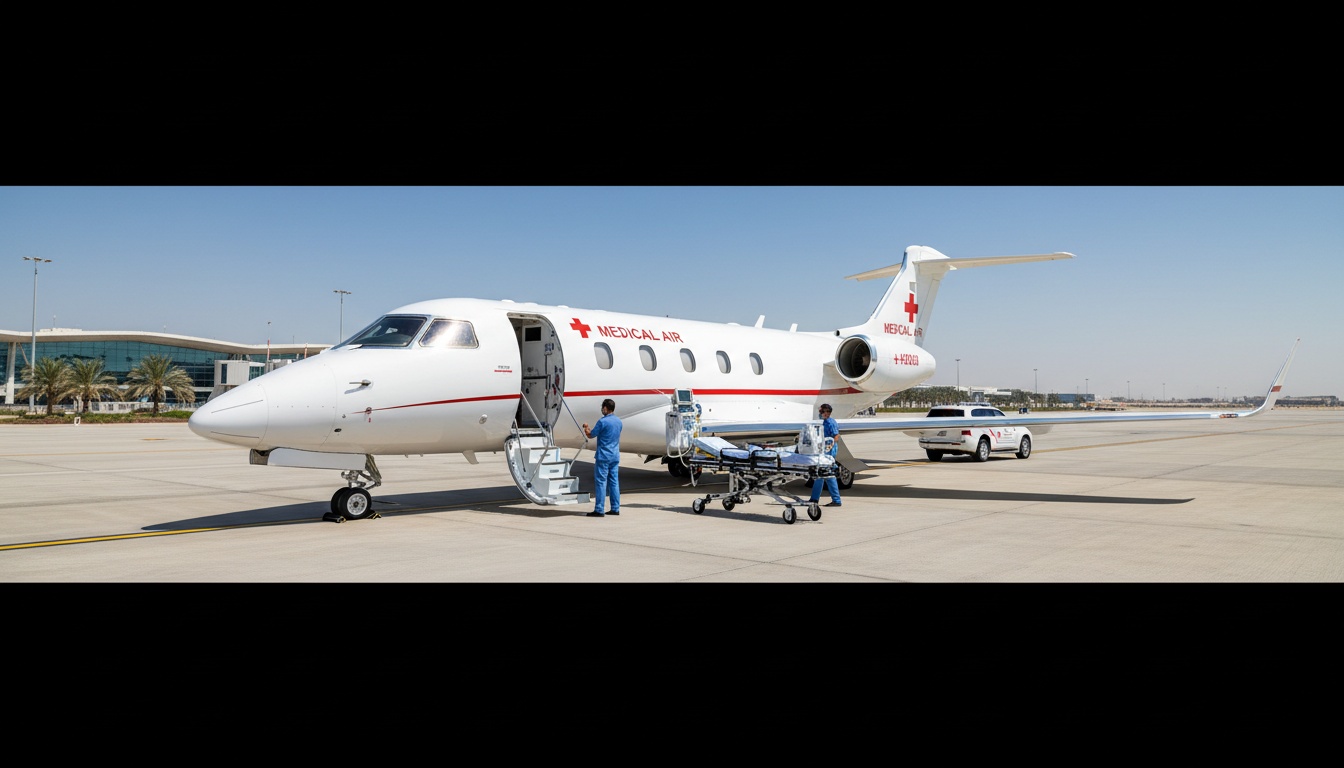
Many UAE residents carrying premium credit cards — Visa Infinite or Mastercard World Elite — assume they're fully covered abroad. But in 2026, rising air ambulance costs have exposed a dangerous gap: the medical evacuation cap buried in your card's fine print. Before your next international trip, explore your travel insurance options on eSanad and understand exactly what your card does — and doesn't — cover.
Understanding Medical Evacuation vs. Emergency Medical Expenses in UAE Policies
Most cardholders confuse two entirely different benefits: emergency medical expenses and medical evacuation. Emergency medical expenses cover your hospital bills at the destination. Medical evacuation — the far more expensive event — covers transporting you to a facility capable of treating you, or flying you back to the UAE.
This distinction matters enormously. A serious cardiac event in rural Japan or a diving accident in the Maldives may require a specialized air ambulance with medical staff. That flight alone can cost $80,000–$150,000, far beyond what most UAE-issued premium credit cards cap their evacuation benefit at.
There's also a structural trap unique to UAE-issued cards: evacuation coverage is typically managed by a Third-Party Administrator (TPA), not the bank itself. The TPA must pre-authorize the evacuation before it happens. In a life-threatening emergency, waiting hours for TPA approval — often across time zones — can be catastrophic.
Additionally, many card policies are secondary coverage, meaning the insurer only pays after you've exhausted all other applicable coverage — including your employer health plan. This can significantly delay reimbursement and even reduce payable amounts.
If you're traveling to high-altitude or remote destinations, also read about helicopter rescue and UAE travel insurance for adventurous trips to understand what extra cover you may need.
The 2026 Hidden Cap Breakdown: Credit Card Limits vs. Actual Evacuation Costs
Here's the reality check for 2026: evacuation costs have risen sharply, driven by fuel costs, specialized aircraft demand, and medical staffing inflation across the Middle East–Asia corridor.
Typical air ambulance costs to Dubai in 2026:
- From Southeast Asia: $70,000–$110,000
- From the US or Canada: $120,000–$200,000
- From Western Europe: $50,000–$80,000
- From East Africa: $45,000–$75,000
Most UAE premium credit cards cap medical evacuation at $50,000 to $100,000. Even at the higher end, a US-origin evacuation leaves you personally liable for $50,000–$100,000 in uncovered costs.
There's another complication: the full payment rule. Credit card travel insurance only activates if you paid the full trip cost — or a qualifying percentage — using that specific card. If you paid for flights with miles, a different card, or split the payment, your evacuation coverage may be void entirely. For a detailed breakdown of this rule, read our guide on the credit card travel insurance full payment rule in UAE.
For US-bound travelers specifically, the numbers are even more alarming. Our analysis of why UAE travelers need $500k medical cover for US summer trips shows how quickly hospital and evacuation bills compound in North America.
Comparing Premium UAE Credit Cards with Standalone Travel Insurance
The table below summarizes how UAE premium credit cards stack up against dedicated standalone travel insurance plans available in 2026.
| Feature | Standard Premium Credit Card | UAE Standalone Travel Insurance |
|---|---|---|
| Medical Evacuation Limit | $50,000–$100,000 | Up to $1,000,000+ |
| Repatriation of Remains | Often capped at $15,000 | Typically $25,000–$50,000 |
| Pre-approval Requirement | Yes — TPA must authorize | Usually 24/7 direct assistance |
| Coverage Trigger | Full trip paid by card | Premium paid; no card link |
| Bed-to-Bed Transfer | Rarely guaranteed | Standard in most plans |
| Schengen Visa Compliance | Often insufficient | EUR 30,000 minimum met |
| Secondary vs. Primary Coverage | Secondary (most cards) | Primary |
| COVID-19 Evacuation | Excluded by most cards | Available in select plans |
For Schengen visa applicants, the stakes are especially high. The EU requires insurance that explicitly covers repatriation for medical reasons with a minimum of EUR 30,000. Many UAE credit card certificates fail this test outright. Review our dedicated guide on Schengen visa insurance requirements for UAE residents in 2026 before submitting your visa application.
Standalone plans from eSanad are structured as primary coverage, activate regardless of payment method, and include direct emergency assistance — bypassing the TPA authorization delay entirely. Compare standalone travel insurance plans on eSanad to find the right fit before your next trip.

Compare & Choose on eSanad
Critical Checklist: 5 Questions to Ask Your Bank Before Your Next International Trip
Before relying on your credit card's travel insurance, get clear answers to these five questions:
What is the exact medical evacuation limit? Ask for the specific dollar cap, not a general "covered" confirmation.
Is this primary or secondary coverage? If secondary, identify which other insurance must be exhausted first.
Who is the TPA, and what is their 24/7 number? Store this contact in your phone before departure.
Does coverage require the full trip to be charged to this card? Confirm which payment components qualify.
Is repatriation of remains separately capped? This is often a lower, separate sub-limit within the policy.
Get a Free Quote Now
Conclusion
Bottom line: In 2026, relying solely on credit card travel insurance for medical evacuation is a significant financial risk for UAE-based travelers. Rising air ambulance costs, TPA authorization delays, secondary coverage structures, and low caps mean that a single serious emergency could leave you with a six-figure out-of-pocket bill. A standalone travel insurance policy provides broader, primary protection — often at a fraction of the potential cost.
Short Summary: UAE credit card medical evacuation caps in 2026 leave travelers exposed — here's what to check before your next trip.
Meta Description: Discover the hidden medical evacuation caps on UAE credit cards in 2026 and why standalone travel insurance offers far superior protection abroad.
Slug: credit-card-travel-insurance-uae-2026-medical-evacuation-cap
Explore eSanad →
FAQ
What is the difference between "medical emergency" and "medical evacuation" on UAE credit cards?
Medical emergency coverage pays for treatment costs at your destination hospital. Medical evacuation covers the cost of transporting you — typically by air ambulance — to a better-equipped facility or back to the UAE. These are separate benefits with separate, often very different, limits.
Does my UAE credit card insurance cover COVID-19-related evacuations in 2026?
Most UAE-issued premium credit cards still explicitly exclude pandemic-related evacuation. Standalone travel insurance plans, however, may include COVID-19 evacuation as an optional add-on or within comprehensive plans. Always confirm in writing before travel.
Will a UAE credit card insurance certificate satisfy Schengen visa requirements?
Usually not. Schengen regulations require a minimum EUR 30,000 coverage specifically including repatriation for medical reasons, valid across all Schengen states. Many credit card certificates lack this specific language, which can result in visa rejection. A dedicated standalone policy is safer.
What is the average cost of an air ambulance from Europe to Dubai?
In 2026, a medically equipped air ambulance from Western Europe to Dubai typically costs between $50,000 and $80,000. From the US, this can reach $150,000–$200,000. Many card caps fall well short of these figures.
Can I buy a top-up evacuation plan if my credit card limit is too low?
Yes. Standalone evacuation top-up plans are available and specifically designed to supplement insufficient card coverage. These are cost-effective solutions for frequent travelers whose card cap doesn't match the risk profile of their destination.
Editorial note: This article is for general information and does not constitute insurance advice. Always confirm terms with your insurer.