

Insurance
Eid 2026 Health Insurance: Guide for ER Emergency Coverage

Eid Al-Fitr 2026 means family gatherings, generous feasts, and — for some — an unexpected trip to the emergency room. Before you assume your UAE health insurance automatically covers every post-feast discomfort, there are critical distinctions to understand. This guide explains what legally qualifies as an ER emergency under DHA and DOH rules, and how to protect your family with the right health insurance plan.
Understanding Emergency Medical Coverage in the UAE: What Qualifies?
Under UAE health regulations, an "emergency" is legally defined as any acute condition threatening life, limb, or organ function requiring immediate stabilization. Both the Dubai Health Authority (DHA) and Abu Dhabi's Department of Health (DOH) mandate that hospitals must treat and stabilize emergency patients first — regardless of insurance network status or payment ability.
This matters enormously during Eid, when clinics close and residents default to ER departments for conditions that may not legally qualify as emergencies.
The regulatory distinction is clear:
- True emergency: Severe chest pain, difficulty breathing, suspected food poisoning with extreme dehydration, loss of consciousness, or acute allergic reaction (anaphylaxis)
- Urgent but non-emergency: Mild stomach ache, bloating, fatigue, or general malaise after overeating — better suited for an OPD or urgent care clinic
Residents on the Essential Benefits Plan (EBP), which covers lower-salary employees in Dubai, should note that emergency stabilization is always included, but non-emergency ER visits may face co-payment penalties. For a deeper comparison of plan types, read our guide on Comprehensive vs Basic Health Insurance in the UAE.
Does Your Insurance Plan Cover Eid-Related ER Visits? A Case-by-Case Breakdown
The phrase "food coma" is not a recognized medical diagnosis. Clinically, what most people experience after a heavy Eid meal is postprandial somnolence — temporary drowsiness caused by digestive activity. This alone will not constitute an insurable emergency event.
However, genuine medical emergencies do spike during festive seasons — particularly acute gastroenteritis, food poisoning from communal dishes, and cardiac events triggered by high-sodium, high-fat holiday meals.
ER Coverage vs. OPD Care for Digestive Distress
| Symptom Severity | Facility Type | Insurance Coverage Impact |
|---|---|---|
| Mild indigestion / lethargy | Network Clinic (OPD) | Standard co-payment (typically 20%) |
| Acute food poisoning / severe dehydration | Emergency Room (ER/IPD) | Covered as emergency (often 0% co-pay for life-threatening) |
| Non-emergency ER use | ER Department | Risk of claim rejection or higher co-pay |
| Anaphylaxis / chest pain | Any ER (network or not) | Mandatory stabilization; direct billing or reimbursement applies |
Pre-existing conditions such as IBS, diabetes, or hypertension may complicate claims if the insurer argues the acute episode was a foreseeable extension of a chronic condition. Always disclose such conditions accurately at policy inception.
Golden Visa holders and investors with premium health plans typically enjoy broader emergency access and lower co-pays. Review your policy's emergency clause, or explore health insurance options on eSanad to confirm your current coverage tier.
Comparing Network vs. Non-Network ER Admissions During Public Holidays
During Eid, many network clinics and polyclinics operate on reduced hours or close entirely. This pushes residents toward non-network or government hospitals — which creates a coverage gap many policyholders don't anticipate.
Here is how the two scenarios work under UAE insurance rules:
In-Network ER: Direct billing applies. The hospital bills your insurer directly. Your only obligation is the applicable co-payment or deductible per your plan. This is the simplest and most cost-effective route.
Out-of-Network ER (Emergency): DHA and DOH regulations require hospitals to stabilize you regardless of network. However, billing defaults to reimbursement — meaning you pay upfront and claim later. Keep all receipts, discharge summaries, and medical reports. Reimbursement timelines vary by insurer but typically take 15–30 business days.
Out-of-Network ER (Non-Emergency): This is where claims frequently get rejected. If the insurer's medical review team determines your ER visit was not an emergency, they may refuse reimbursement entirely or apply punitive co-pay rates.
For families managing non-network emergencies during holidays, our dedicated guide on Eid Al Fitr 2026 family insurance and non-network emergencies covers the reimbursement process step by step.
Compare & Choose on eSanad
The Resident's Checklist: Managing Health Emergencies During the Eid Break
Preparation before Eid is far more effective than navigating claims after. Use this checklist to protect your family:
- Locate your nearest in-network ER now — don't search during a crisis. Most insurer apps include a hospital locator.
- Save your insurer's 24/7 emergency helpline in your phone before the holiday begins.
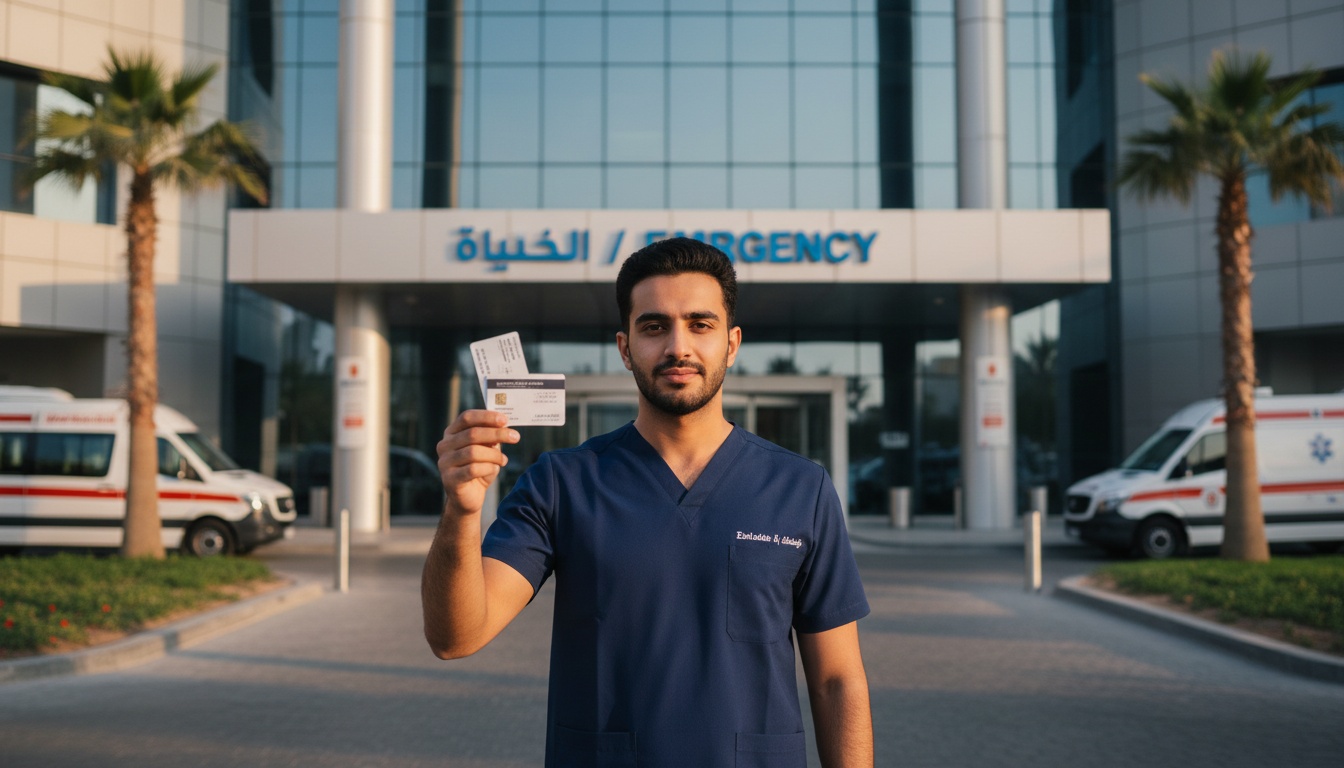
- Keep digital and physical copies of your Emirates ID and insurance card accessible at all times.
- Know your plan's emergency co-pay structure — some plans waive co-pays for life-threatening emergencies; others apply a flat fee.
- Carry a basic medication kit — oral rehydration salts, antacids, and antihistamines can manage minor Eid-related discomfort without an ER visit.
- For visiting parents or elderly relatives, confirm whether their plan includes emergency coverage. See our guide on Eid Al-Fitr 2026 emergency health insurance for visiting parents for specific advice.
Get a Free Quote Now
Conclusion
Bottom line: "Food coma" is not a medical diagnosis, and casual ER visits during Eid can result in rejected claims or unexpected out-of-pocket costs. Understanding the legal definition of an emergency under DHA and DOH rules — and knowing your plan's network rules — is the most valuable preparation you can do before the holiday. Compare and upgrade your family's coverage at eSanad before Eid Al-Fitr 2026 begins.
Short Summary: Understand what qualifies as an ER emergency under UAE law during Eid 2026 and whether your health insurance will cover the visit.
Meta Description: Learn what UAE health insurance covers for Eid 2026 ER visits. Understand DHA and DOH emergency rules before the holiday. Compare plans on eSanad.
Slug: eid-2026-health-insurance-er-emergency-cover-uae
FAQ
Will my insurance reject a claim if I go to the ER for simple indigestion?
Yes, this is a real risk. If a medical review determines your condition did not meet the emergency threshold under DHA or DOH guidelines, your insurer may reject the ER claim or apply a non-emergency co-pay rate. Always use OPD or urgent care for mild symptoms.
Does Abu Dhabi's DOH have different emergency rules than Dubai's DHA?
Both authorities mandate emergency stabilization regardless of network. However, the Essential Benefits Plan structure and co-payment percentages differ between emirates. Abu Dhabi's DOH applies its own Thiqa and Daman framework, while Dubai's DHA governs the EBP. Always verify with your specific insurer.
What should I do if a non-network hospital demands payment during an Eid emergency?
Pay if necessary to receive treatment, retain all documentation, and file a reimbursement claim with your insurer afterward. Do not delay life-saving treatment due to payment concerns — UAE law obligates hospitals to stabilize emergencies first. Contact your insurer's 24/7 helpline immediately.
Are Golden Visa health plans different when it comes to emergency approvals?
Golden Visa holders are typically required to hold comprehensive health plans, which generally include broader emergency access and lower co-pays. However, specific coverage depends on the individual policy. Review your plan's emergency clause carefully.
Is "food coma" a valid medical diagnosis for an insurance claim?
No. "Food coma" is a colloquial term, not a recognized ICD medical diagnosis. A valid claim requires a documented clinical condition such as acute gastroenteritis, food poisoning, or anaphylaxis — diagnosed by a licensed physician and supported by medical records.
Editorial note: This article is for general information and does not constitute insurance advice. Always confirm terms with your insurer.