

Motor Insurance
Engine Hydrolock Coverage UAE: Sedan vs SUV Guide 2026
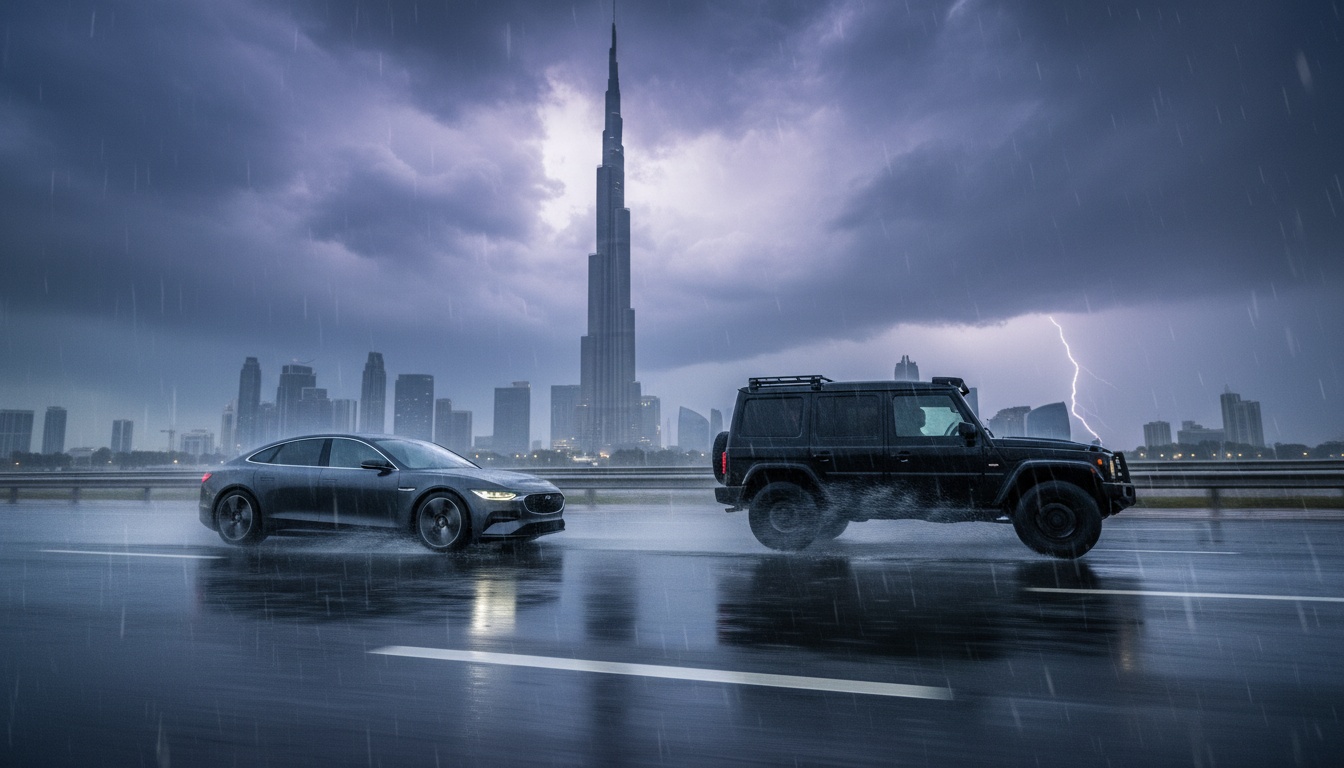
With the National Center of Meteorology (NCM) flagging active rainfall across Dubai, Sharjah, and the Northern Emirates this March 2026, engine hydrolock has become one of the most urgent — and least understood — motor insurance risks for UAE drivers. This guide breaks down the science of water ingestion, how your motor insurance policy responds, and why your car's body type may determine whether your claim is accepted or rejected.
Understanding Engine Hydrolock: The Science of Water Ingestion
Engine hydrolock happens when water enters the combustion chamber through the air intake. Unlike air, water cannot be compressed — so when the piston attempts its compression stroke, the rigid column of water causes catastrophic failure: bent connecting rods, cracked cylinder heads, or a completely seized engine. Repair costs in the UAE typically range from AED 8,000 to AED 35,000 depending on engine type and brand.
This is not a gradual failure. A car driven through just 30–40 cm of standing water — a depth common on underpasses in Sharjah and Al Quoz during moderate rainfall — can hydrolock within seconds. The engine stalls, and attempting to restart it almost always worsens the damage.
If you've recently modified your vehicle's body kit or air intake system, be aware that such changes can affect coverage eligibility — as detailed in this guide on body kit modifications and car insurance renewal UAE 2026.
Insurance Coverage Analysis: Comprehensive vs. Special Perils in the UAE
This is where most UAE drivers are caught off guard. The UAE Unified Motor Insurance Policy has two distinct frameworks that apply to water damage:
Standard Comprehensive Cover includes accidental damage but often excludes "natural perils" such as floods, storms, and standing water ingestion. Insurers treat these as separate risk categories.
Special Perils Add-on (also called "Natural Perils Extension") explicitly covers damage caused by floods, rainstorms, and rising water — including engine hydrolock — when the vehicle is parked or caught in a sudden flash flood beyond the driver's control.
The critical legal distinction, reinforced by claim disputes following the April 2024 UAE floods, is between:
- Force Majeure: Your car is parked and floodwater rises around it — typically covered under Special Perils.
- Willful/Negligent Act: You drive into visible standing water and the engine ingests water — frequently excluded as owner negligence.
The UAE Central Bank's insurance regulations require insurers to clearly define these exclusions in policy documents. Always verify whether your policy includes a Special Perils extension before March rains arrive.
When renewing your policy, checking for this add-on is essential — as outlined in our guide on motor insurance renewal and natural perils add-ons. You can compare motor insurance plans on eSanad to confirm whether Special Perils coverage is included.
Sedans vs. SUVs: Ground Clearance and Air Intake Thresholds
The physical architecture of your vehicle is the primary determinant of hydrolock risk during UAE rain events. Here is how popular vehicle categories compare:
| Feature | Sedans and Low-Profile EVs | SUVs and 4x4s |
|---|---|---|
| Avg. Air Intake Height | 25–35 cm from ground | 45–65 cm from ground |
| Avg. Ground Clearance | 13–16 cm | 20–28 cm |
| Hydrolock Risk Level | High | Moderate–Low |
| Common Failure Point | Air filter / throttle body | Snorkel absent; door seals |
| Claim Acceptance Probability | Lower (negligence risk higher) | Higher (force majeure easier to argue) |
| Legal "Force Majeure" Threshold | Easier to breach | Harder to breach |
Popular UAE sedans — including the Toyota Camry, Nissan Altima, and Chinese brands like Geely Emgrand — have air intakes averaging 28–32 cm. Water depths that an SUV navigates safely can be catastrophic for these vehicles. Owners of Chinese car brands should also review non-agency repair limits for Geely and Haval UAE 2026, as hydrolock repairs on these models carry specific workshop eligibility rules.
Compare & Choose on eSanad
Common Reasons for Hydrolock Claim Rejections in the UAE
Understanding why claims fail is as important as knowing what's covered. UAE insurance assessors look for the following red flags:
- No police or RTA report: A "To Whom It May Concern" report from Dubai Police or Sharjah Police is the primary document initiating a flood-related claim. Without it, insurers have grounds to reject.
- Evidence of attempted restart: Repeated ignition attempts after stalling in water is the most common reason adjusters classify damage as driver-aggravated rather than weather-caused.
- No Special Perils add-on: Filing a hydrolock claim under a standard comprehensive policy without this extension is the most straightforward rejection scenario.
- Dashcam or witness contradicts the claim: If footage shows you entering a visibly flooded road, the "negligence" clause applies.
- Aftermarket air intakes: Non-standard intake modifications can void coverage entirely.
For EV owners, water damage creates an additional layer of complexity — battery versus engine damage is assessed differently. Review the distinctions covered in our EV charging cable and motor insurance coverage guide for 2026.
Get a Free Quote Now
Conclusion
Bottom line: Engine hydrolock is one of the most expensive and preventable vehicle failures during UAE rain season — and whether your insurer pays depends less on the flood itself and more on your policy's Special Perils clause and how you behaved when the water appeared. Sedans and low-profile EVs carry significantly higher hydrolock risk than SUVs, and standard comprehensive cover is rarely enough. Before the next rain forecast hits, verify your add-ons and know your vehicle's limits.
Short Summary: Engine hydrolock during UAE March rains — what's covered, why claims get rejected, and how sedan and SUV risks differ under UAE motor insurance law.
Meta Description: Does UAE motor insurance cover engine hydrolock? Learn the Special Perils vs comprehensive gap, sedan vs SUV risk, and how to protect your claim in 2026.
Slug: engine-hydrolock-insurance-uae-sedans-vs-suvs-march-rain-2026
FAQ
Does standard UAE comprehensive insurance cover engine hydrolock?
Not automatically. Standard comprehensive policies often exclude flood and natural peril damage. You need a Special Perils add-on specifically covering flood and storm events to have a valid hydrolock claim.
If I drive into a puddle and my engine dies, is it considered owner negligence?
In most cases, yes. UAE insurers distinguish between a vehicle flooded while parked (force majeure) and one driven into standing water. Driving into visible flooding is frequently categorized as negligent conduct, leading to claim rejection.
Will my insurance cover hydrolock for a Chinese EV brand like BYD or MG?
Coverage depends on your policy terms, not the brand. However, Chinese EVs and hybrids have sensor-based intake systems with unique water vulnerability profiles. Confirm with your insurer that the engine protection clause covers electronic intake failures, and check whether agency repairs are required.
What is the average cost of repairing a hydrolocked engine in the UAE?
Repair costs range from AED 8,000 for minor rod damage to AED 35,000+ for a full engine replacement on premium or EV models. This makes the Special Perils add-on — typically AED 150–400 annually — one of the highest-value insurance decisions you can make.
Can a police report help get a hydrolock claim approved?
Yes, significantly. An RTA or Dubai/Sharjah Police "To Whom It May Concern" report documenting the flood conditions at the time and location of the incident is often a mandatory first step in initiating a successful claim. Always obtain one immediately after the incident.
Editorial note: This article is for general information and does not constitute insurance advice. Always confirm terms with your insurer.