

Travel Insurance
Senior Travel Insurance Stable Condition Clause UAE 2026

Planning international travel with elderly parents in 2026? The single most misunderstood clause in senior travel insurance is the stable condition requirement — and misreading it can mean a claim rejection at the worst possible moment. This guide breaks down exactly how UAE insurers define stability, why "controlled" diabetes or hypertension may still leave your parents unprotected, and what documentation you need before departure. Start by exploring your travel insurance options on eSanad.
Defining the 'Stable Condition' Clause in Senior Travel Insurance
The "stable condition" clause is a contractual definition embedded in almost every senior travel insurance policy. It determines whether a pre-existing medical condition qualifies for emergency coverage abroad — or is excluded entirely.
In practice, a condition is considered stable when, within a defined lookback window before the policy start date, all of the following are true:
- No new symptoms have appeared
- No hospitalizations or emergency visits have occurred
- No changes in medication type, dosage, or treatment plan have been made
- No new investigations, referrals, or diagnostic tests have been recommended
The lookback window — called the Stability Period — is typically 90 to 180 days, depending on the insurer and destination. For travelers aged 65 and above, 2026 UAE insurance trends show that many insurers have tightened this to the 180-day end of the range.
If you are sponsoring parents in the UAE and concerned about how chronic conditions are handled under local plans, this guide on sponsoring parents in UAE 2026 with chronic disease coverage provides helpful context.
The 2026 Framework: How UAE Insurers Evaluate Pre-Existing Ailments
Under guidelines aligned with the UAE Central Bank's insurance regulatory framework, travel insurers in the UAE are required to clearly disclose pre-existing condition exclusions at the point of sale. However, what constitutes a "pre-existing" versus "stable" condition still varies between providers.
Here is how the stability clause applies to common senior conditions in 2026:
| Medical Condition | Definition of 'Stable' | Typical Stability Period Required | Common Exclusion Triggers |
|---|---|---|---|
| Hypertension / Blood Pressure | No change in medication type or dosage | 90 days | ER visit for dizziness or headache |
| Type 2 Diabetes | No insulin adjustment; HbA1c within target | 90–180 days | GP-initiated medication switch |
| Heart Disease / Arrhythmia | No new cardiac investigations ordered | 180 days | Stress test or Holter monitor referral |
| Asthma / COPD | No change in inhaler or corticosteroid prescription | 90 days | Unscheduled GP visit for breathlessness |
| Arthritis / Joint Conditions | No new treatment or physiotherapy referral | 90 days | New pain management prescription |
A critical 2026 update: a minor GP-initiated dosage adjustment — even a routine optimization of a long-term prescription — restarts the stability clock entirely. This surprises many families who assume "controlled" means "covered."
For Schengen-bound travel specifically, visa-linked insurance policies often exclude pre-existing conditions outright. Understanding Schengen visa summer 2026 insurance requirements is essential before assuming visa-minimum cover is sufficient for elderly parents.
Stability Period vs. Treatment-Free Period: Key Differences for Seniors
These two terms are frequently confused, yet they carry very different implications for senior travelers.
Stability Period means the condition has been present but unchanged for a defined window. Medication is acceptable — as long as nothing has been altered.
Treatment-Free Period (used in some North American-linked policies) means the condition must have required no treatment whatsoever — including routine prescriptions — during the lookback window. This is a far stricter standard and effectively excludes most chronic senior conditions unless a specific waiver is purchased.
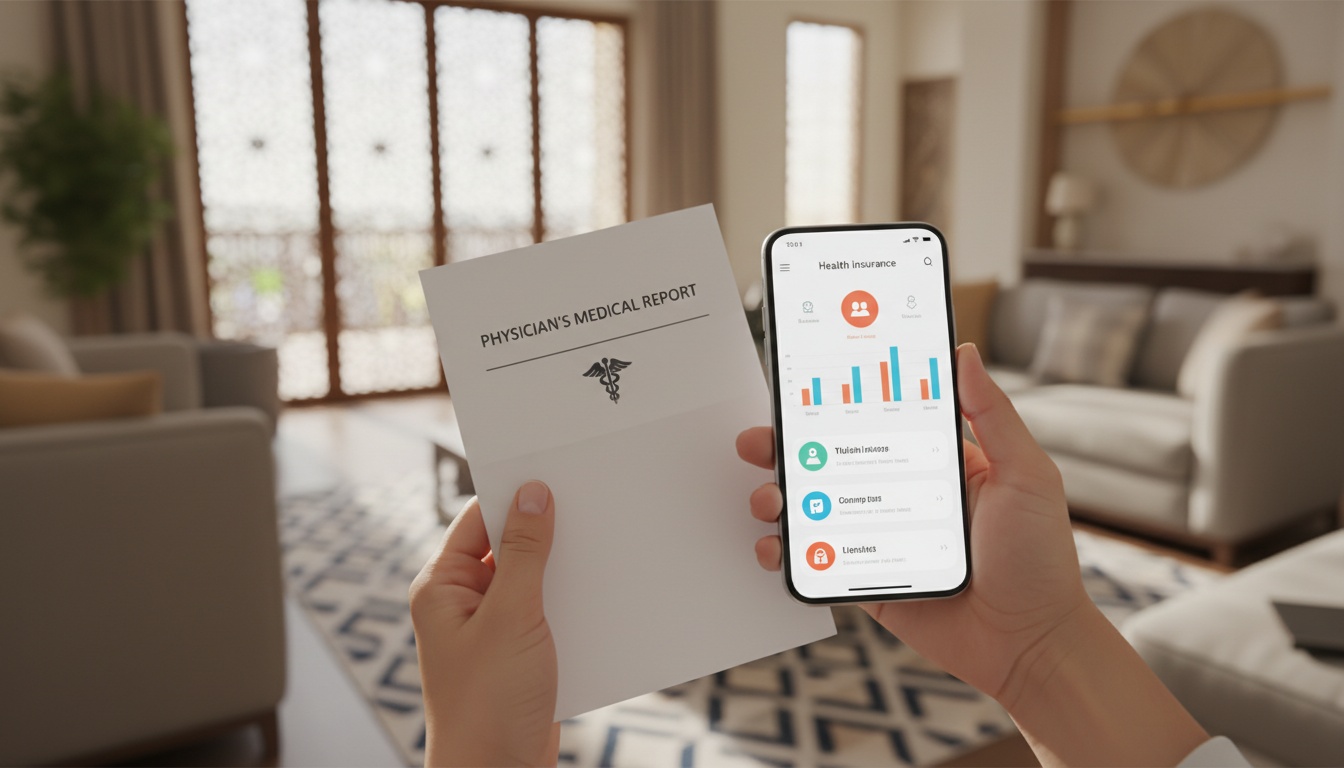
For UAE residents planning a USA summer trip in 2026, North American policies apply the most rigorous checks. The MOHAP guidelines recommend that families traveling with senior parents obtain a formal physician's letter confirming stability before departure.
Standard visa-linked insurance almost always excludes pre-existing conditions entirely. A premium upgrade — often called a Pre-Existing Medical Condition (PEMC) waiver — is required to activate any stability-based coverage, and it must be purchased at the time of policy issuance, not after a health event occurs.
Compare & Choose on eSanad
Critical Checklist: Documentation Required for Senior Parent Coverage
Preparing the right paperwork before departure is not optional — it is the difference between a paid claim and a rejected one. UAE insurers, in line with DHA health documentation standards, increasingly require verifiable medical records to support stability claims.
Before purchasing the policy:
- Obtain a physician's letter confirming all current medications and dosages
- Ensure no medication changes have occurred within the stability window
- Confirm no pending referrals, investigations, or follow-up tests exist
Before departure:
- Medical reports must be dated within 30 days of travel
- Carry translated copies of all prescriptions if traveling to non-English-speaking countries
- Document the last hospitalization date formally — even if it was years ago
At the claim stage:
- Insurer will request the full medical history covering the stability period
- Any undisclosed GP visit during the lookback window can void the claim
- Emergency medical evacuation claims are subject to the same stability review — see our guide on emergency medical evacuation coverage for seniors
Get a Free Quote Now
Conclusion
Bottom line: The stable condition clause in senior travel insurance is more technical — and more consequential — than most families realize. In 2026, UAE insurers are applying stricter stability period enforcement for travelers over 65, and even a minor medication adjustment can restart the clock entirely. Understanding the difference between a stability period and a treatment-free period, and securing the right PEMC waiver, are non-negotiable steps before any international trip with elderly parents.
Compare senior-friendly travel insurance plans on eSanad to find policies that clearly define stability terms and offer pre-existing condition waivers for your parents' specific health profile.
Short Summary: Learn how the stable condition clause works in UAE senior travel insurance and what it means for elderly parents with pre-existing conditions in 2026.
Meta Description: Understand the stable condition clause in UAE senior travel insurance for 2026. Learn stability periods, PEMC waivers, and documentation tips for elderly parents.
Slug: senior-travel-insurance-stable-condition-clause-uae-2026
Explore eSanad →
FAQ
What defines a 'Stable Condition' in UAE travel insurance policies?
A stable condition is one where no new symptoms, hospitalizations, or changes in medication or treatment have occurred within the insurer's defined lookback window — typically 90 to 180 days before the policy start date. UAE insurers apply this definition strictly, including to "well-controlled" chronic conditions.
Does a change in medication dosage restart the stability clock?
Yes. Any adjustment to medication type, dosage, or frequency — even a minor GP-initiated optimization — resets the stability period entirely. The new 90 or 180-day window begins from the date of that change, not the original diagnosis date.
Are routine check-ups considered a breach of the stable condition clause?
Routine check-ups alone generally do not breach stability. However, if a check-up results in a new referral, investigation, or prescription change, the stability clock resets. Always confirm with your insurer whether a scheduled appointment generated any new treatment recommendations.
Can I buy a Pre-Existing Medical Condition (PEMC) waiver in the UAE?
Yes, premium travel insurance plans available through platforms like eSanad offer PEMC waivers that activate coverage for stable pre-existing conditions. These must be purchased at policy inception — you cannot add them after a health event has occurred.
How does the stability clause affect Schengen visa insurance requirements?
Standard Schengen visa-linked insurance typically excludes pre-existing conditions entirely. For elderly parents with chronic conditions, a premium policy with a PEMC waiver is essential. Refer to the Golden Visa Schengen travel insurance requirements 2026 guide for destination-specific rules.
Editorial note: This article is for general information and does not constitute insurance advice. Always confirm terms with your insurer.