

Travel Insurance
Spring Trekking 2026: High Altitude Rescue Insurance UAE
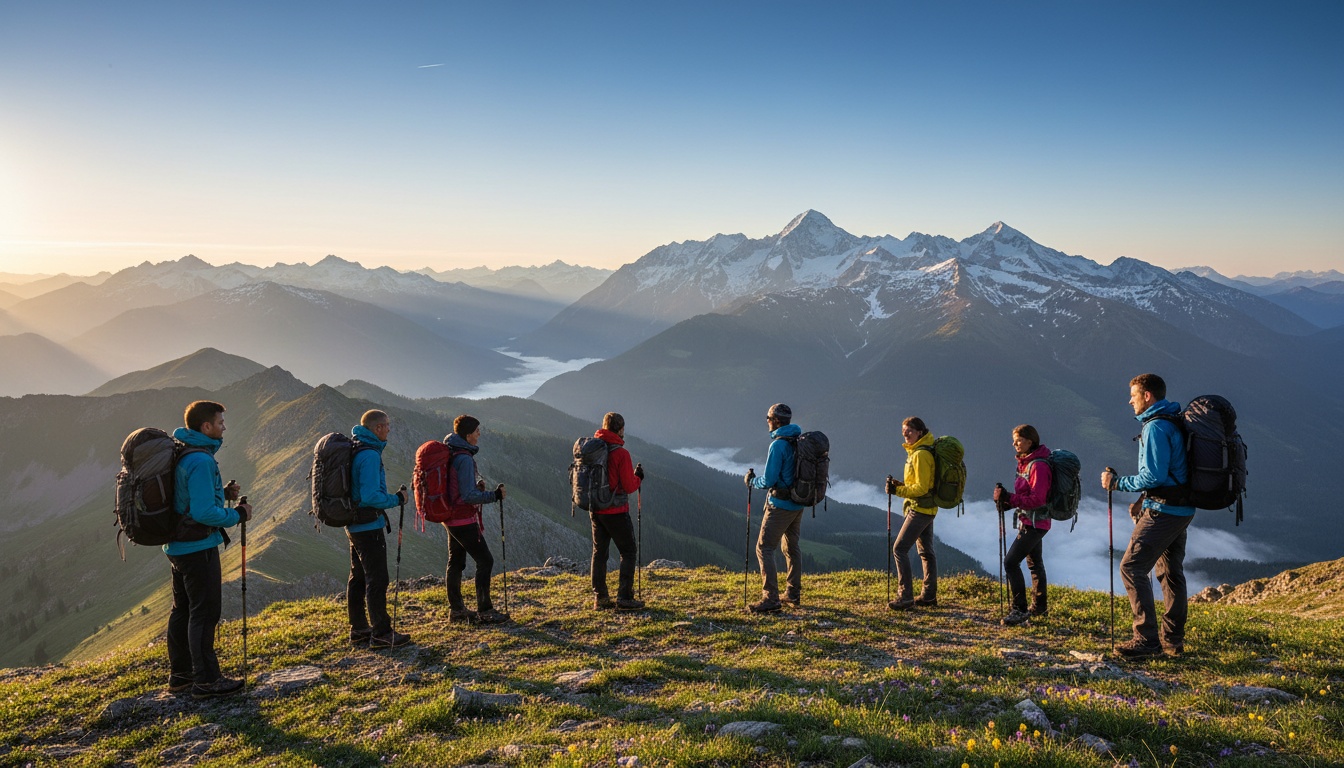
Planning a spring trek to Nepal, the Alps, or Georgia in 2026? Before you lace up your boots, there's a critical question to answer: does your travel insurance actually cover a helicopter rescue at 4,000 metres? Most UAE residents don't discover the answer until it's too late. This guide explains the "Altitude Gap" in standard UAE policies — and how to close it before you depart.
Understanding the Altitude Limit in UAE Travel Insurance Policies
If you purchased a travel policy linked to a UAE visa application or a Schengen requirement, it was almost certainly designed for standard tourist travel — not technical trekking. Most UAE-issued standard policies contain a hard altitude exclusion, typically between 2,500 and 3,000 metres above sea level.
This matters enormously for spring 2026 trekkers. Popular routes like Nepal's Everest Base Camp exceed 5,300 metres. The Tour du Mont Blanc crosses passes above 2,500 metres. Even Georgia's Kazbegi region regularly takes hikers above the 3,000-metre threshold.
The UAE's Central Bank of the UAE (centralbank.ae) regulates minimum insurance standards, but altitude-specific adventure coverage falls entirely outside mandatory minimums. That means unless you specifically requested and paid for an adventure sports rider, you are almost certainly not covered above the policy's altitude ceiling.
For a deeper look at how altitude thresholds are written into UAE policy documents, see our detailed guide on travel insurance altitude limits for spring 2026 hikes.
Standard Coverage vs. High-Altitude Rescue and Evacuation
Understanding what you actually have — versus what you need — is the most important step in adventure travel planning.
| Feature | Standard Policy (Visa-Linked) | Adventure/Extreme Sport Add-on |
|---|---|---|
| Maximum Altitude Limit | 2,500–3,000 m | 6,000 m+ (varies by insurer) |
| Medical Emergencies Abroad | ✅ Covered (below altitude limit) | ✅ Covered at high altitude |
| Helicopter Evacuation (SAR) | ❌ Typically excluded | ✅ Included (subject to limits) |
| Search and Rescue (SAR) Costs | ❌ Not covered | ✅ Covered (up to policy limit) |
| HACE / HAPE Treatment | ❌ Excluded above altitude cap | ✅ Covered with medical rider |
| Solo Trekker Surcharge (2026) | N/A | ✅ Higher premium applies |
A critical distinction that catches UAE travellers off guard: Search and Rescue (SAR) is not the same as Medical Evacuation (Medevac). Your policy may cover emergency transport once you are found and stabilised, but refuse to pay for the mountain rescue operation itself. In the Himalayas, SAR operations alone can cost USD 5,000–10,000 — entirely separate from any hospital bill.
Our related article on Nepal trekking 2026 and UAE travel insurance altitude limits provides destination-specific policy guidance for Himalayan expeditions.
Critical Factors: Altitude Thresholds, SAR, and Medevac
When reviewing or purchasing a high-altitude travel insurance policy for spring 2026, three variables determine whether you are genuinely protected:
1. Declared Altitude Ceiling Always confirm the exact metres written in your policy schedule — not what a sales agent tells you verbally. Some UAE adventure add-ons advertise "mountain coverage" but cap liability at 4,000 metres, which still excludes Everest Base Camp and many Andean routes.
2. SAR vs. Medevac — Read Both Sections Verify that your policy covers both the rescue operation (locating and extracting you) and the subsequent medical evacuation to a suitable hospital. Policies from UAE insurers regulated by the Dubai Health Authority (dha.gov.ae) must be transparent about benefit definitions — use this to your advantage by demanding written clarification.
3. Guide Requirement and 2026 Underwriting Rules In 2026, several UAE underwriters have tightened terms for solo trekkers. A policy that covers a guided group trek on the same route may exclude a solo attempt. If you're trekking independently, disclose this explicitly at the point of purchase.
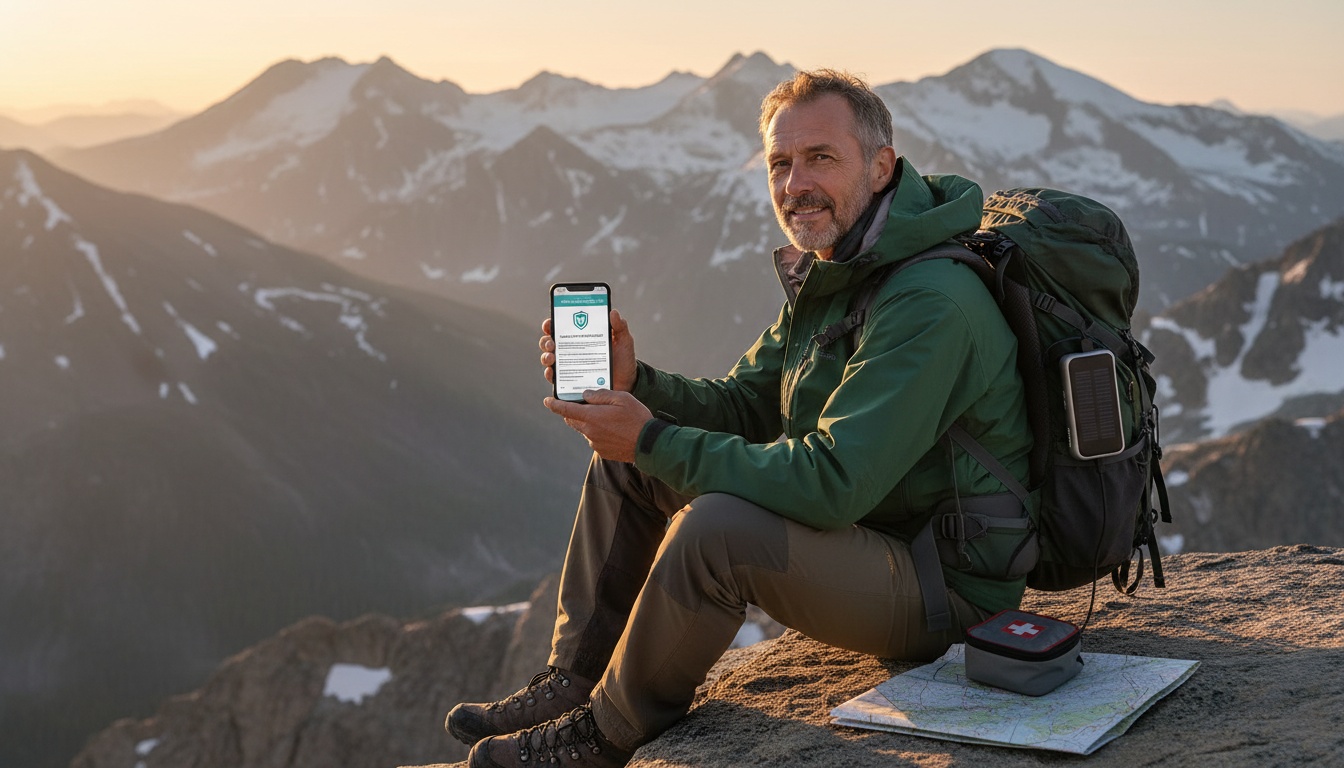
Compare & Choose on eSanad
Pre-Departure Checklist: Verifying Your Trekking Coverage for 2026
Use this checklist before every high-altitude trip departing from the UAE:
- Confirm altitude ceiling — Get the exact figure in writing from your insurer.
- Separate SAR and Medevac limits — Both must be listed; both must be adequate.
- Check activity definitions — Does your policy classify your trek as "hiking," "trekking," or "mountaineering"? Each carries different exclusions.
- Declare your route — Failure to disclose your specific itinerary can void a claim. Yes, insurers do ask and do verify.
- Verify HACE/HAPE coverage — High Altitude Cerebral Edema and Pulmonary Edema are medical emergencies. Confirm they are not excluded as "altitude sickness" under a blanket wellness exclusion.
- Check solo vs. guided status — Solo trekkers may require an additional premium or separate rider in 2026.
- Carry a physical policy card and emergency number — Mobile data is unreliable above 3,500 metres.
If your current policy fails any of these checks, you can compare and upgrade your travel insurance on eSanad before your departure date.
Get a Free Quote Now
Conclusion
Bottom line: Standard UAE travel insurance — particularly visa-linked policies — almost never covers high-altitude rescue, SAR operations, or altitude-related medical emergencies above 2,500–3,000 metres. For spring 2026 treks in Nepal, the Alps, or the Caucasus, you need a dedicated adventure add-on that explicitly covers Search and Rescue, Medevac, and altitude illness. Don't assume; verify in writing. Compare and buy the right adventure travel insurance on eSanad before your trek begins.
Short Summary: Standard UAE travel insurance rarely covers high-altitude rescue — here's what spring 2026 trekkers must check before departure.
Meta Description: Does UAE travel insurance cover high-altitude rescue in 2026? Learn the altitude gap, SAR vs Medevac rules, and how to get the right cover.
Slug: spring-trekking-2026-travel-insurance-high-altitude-rescue-uae
Explore eSanad →
FAQ
Does my Schengen-approved travel insurance cover trekking in the Alps?
Not automatically. Schengen-compliant policies meet minimum medical coverage thresholds but rarely include adventure sports riders. Check your policy's altitude ceiling and activity definitions — many exclude activities above 2,500 metres or classify Alpine trekking as an extreme sport.
What is the typical altitude cutoff in standard UAE travel policies?
Most UAE standard travel insurance policies set the altitude exclusion at 2,500 to 3,000 metres above sea level. Any trek or activity above that threshold is excluded unless you have purchased a specific adventure or extreme sports add-on.
Is helicopter rescue a "medical evacuation" or "search and rescue" under UAE travel policies?
These are two distinct benefits. SAR covers locating and extracting you from a remote or dangerous location. Medevac covers transport to a medical facility once you are stabilised. Your policy must include both for comprehensive high-altitude protection — having only one is a common and costly gap.
Do I need to disclose my specific trekking route to my UAE insurer?
Yes. Failing to disclose your route, altitude, or solo trekker status can result in a voided claim. In 2026, underwriters are applying stricter requirements, particularly for high-risk routes and independent trekkers without licensed guides.
Does travel insurance cover High Altitude Cerebral Edema (HACE) and High Altitude Pulmonary Edema (HAPE)?
Only if your policy explicitly covers altitude-related illness and your emergency occurs within the declared altitude ceiling. Many standard policies exclude altitude sickness entirely. An adventure add-on from a UAE insurer should specifically list HACE and HAPE as covered conditions — confirm this in the policy schedule before you buy.
Editorial note: This article is for general information and does not constitute insurance advice. Always confirm terms with your insurer.