

Health Insurance
2026 UAE Prescription Co-Pay Caps: DHA and DoH Guide

Understanding your pharmacy rights in the UAE just got more important. In 2026, both the Dubai Health Authority (DHA) and the Department of Health Abu Dhabi (DoH) have introduced updated mandatory co-payment caps on prescription medications — directly reducing what patients pay out of pocket. This guide breaks down exactly how these caps work, which plans qualify, and how you can [explore compliant health insurance options](https://www.esanad.com/health-insurance) today.
Understanding Co-Payments: The Legal Foundation of UAE Pharmacy Benefits
A co-payment (co-pay) is the fixed share of a prescription's cost that a patient pays at the pharmacy counter — the insurer covers the rest. A co-payment cap sets the maximum Dirham amount you can be charged for a single prescription, regardless of the drug's actual retail price. This protection is particularly valuable for patients managing chronic illnesses such as diabetes, hypertension, or asthma, where monthly medication costs can accumulate quickly.
In the UAE, co-pay rules are regulated at the Emirate level. The DHA governs Dubai, the DoH governs Abu Dhabi (including the Thiqa and Enhanced programmes for UAE nationals), and the Ministry of Health and Prevention (MOHAP) sets the baseline framework for the Northern Emirates. Historically, inconsistency between these regulators created confusion for patients — particularly for expatriate families managing pre-existing conditions coverage in the UAE.
The 2026 Update: New Mandatory Caps on Prescription Medication Co-Pays
The 2026 regulatory cycle represents a significant milestone in the UAE's push toward Value-Based Healthcare. Both the DHA and DoH have now mandated stricter co-pay caps, with a particular focus on chronic disease medications and high-cost specialty drugs.
Key changes effective in 2026 include:
- Chronic medication protection: Medications for long-term conditions (e.g., insulin, statins, anti-hypertensives) now carry a mandatory co-pay cap of AED 50 per prescription under the Essential Benefits Plan (EBP) in Dubai.
- Specialty drug Prior Authorization (PA): Insurers must now disclose PA timelines clearly. If a PA is not processed within five working days, the insurer must provide a provisional dispensing approval.
- Transparency mandate: All insurers are required to publish their full excluded medication lists on their patient-facing portals by Q1 2026, making it easier to challenge incorrect billing.
- Claims Post-Audit system: The DHA's updated audit mechanism flags pharmacies overcharging beyond the mandated cap, with penalties applied directly to the dispensing outlet — not the patient.
- Golden Visa pharmaceutical minimums: Holders of UAE Golden Visas must now be covered under plans meeting enhanced pharmacy benefit standards, with a minimum annual pharmacy limit of AED 5,000.
These changes align with the UAE's National Agenda for Unified Health Insurance, moving toward a "Basix" and "Enhanced" benefit alignment across all seven Emirates.
Comprehensive vs. Basic Plans: How Your Insurance Tier Affects Drug Discounts
Your co-pay experience in 2026 depends significantly on which insurance tier you hold. The table below illustrates the key differences:
| Plan Specification | Standard Co-Pay % | Per-Prescription Cap (AED) | Annual Pharmacy Limit |
|---|---|---|---|
| Essential Benefits Plan (EBP) | 20% | AED 50 | AED 1,500 |
| Enhanced Comprehensive Plan | 10% | AED 30 | AED 10,000+ |
| Golden Visa / Investor Plans | 0–10% | AED 20–30 | AED 5,000 minimum |
EBP holders — typically low-income workers under the Dubai mandatory scheme — benefit from the new AED 50 hard cap, preventing catastrophic pharmacy bills. Enhanced plan holders enjoy lower percentage co-pays with significantly higher annual limits, suitable for families with complex medical needs. If you hold a Golden Visa or are considering investor visa health insurance options, the 2026 mandates guarantee a minimum pharmacy safety net.
In Abu Dhabi, Thiqa cardholders (UAE nationals) continue to receive near-zero co-pays at DoH-licensed facilities, while Enhanced plan members face co-pays of 10–20% depending on their provider network tier. Understanding these regional differences is crucial — a topic explored in depth when comparing DHA vs DoH regional differences in UAE health insurance.
Generic drugs are actively incentivised under the 2026 framework. Where a DHA-approved generic equivalent exists, insurers may apply a 0% co-pay on the generic version, while charging the standard percentage on the brand-name alternative. This encourages cost-effective prescribing without restricting patient choice.
Compare & Choose on eSanad
Pharmacy Claims Checklist: Ensuring Your Prescriptions Meet 2026 Regulatory Standards
Use this checklist every time you fill a prescription to protect your patient rights in 2026:
- Confirm formulary inclusion — Ask your insurer or check their online portal to verify the drug is covered before visiting the pharmacy.
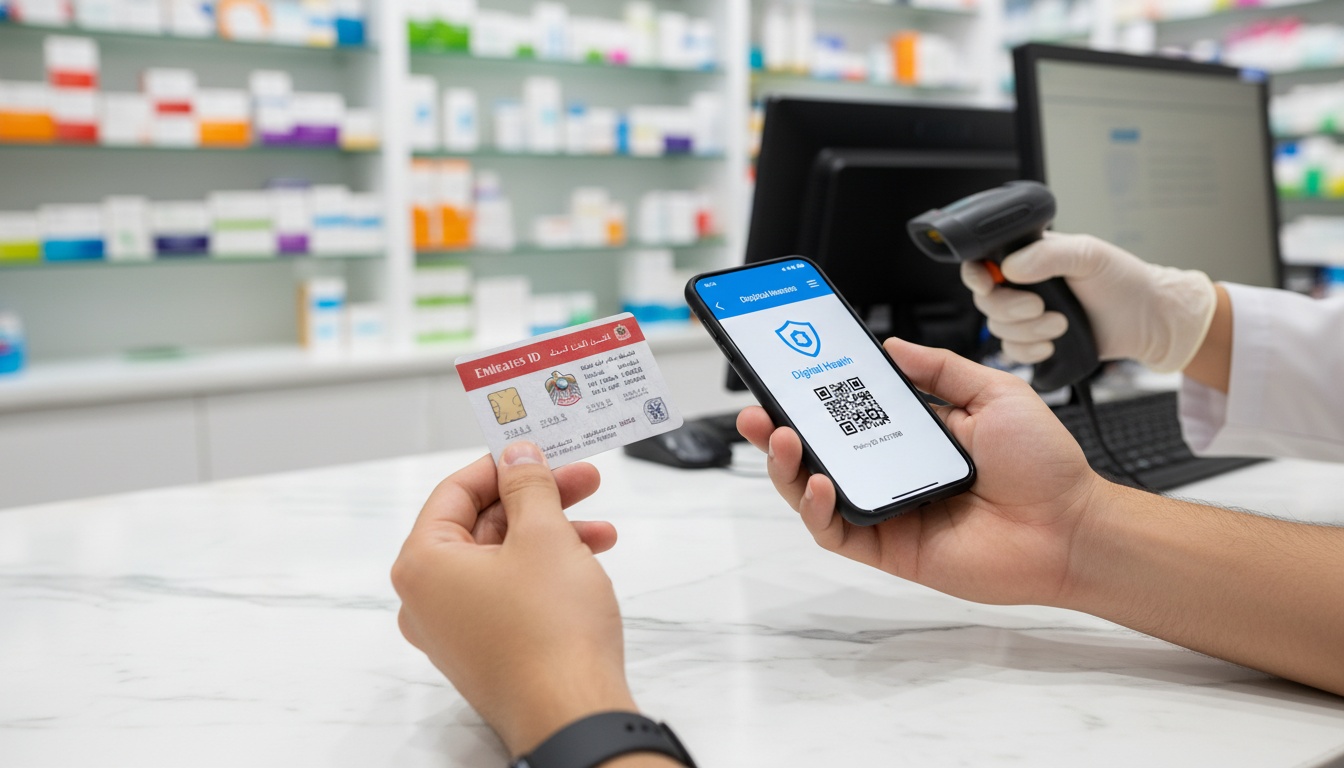
- Present your insurance card and Emirates ID — Both are required for electronic claim submission under the DHA's eClaims system.
- Request an itemised receipt — This shows the drug price, your co-pay charged, and the insurer's portion — essential if you need to appeal a rejected medical insurance claim.
- Check the co-pay against the cap — If charged more than the mandated cap for your plan tier, ask the pharmacy to resubmit the claim or contact your insurer directly.
- Verify Prior Authorization status — For specialty medications, confirm PA approval before dispensing to avoid full out-of-pocket costs.
- Keep records for the annual limit — Track your cumulative pharmacy spend; once you hit your annual limit, different cost-sharing rules may apply.
Residents managing complex medication needs can compare updated plan structures directly through eSanad's health insurance portal.
Get a Free Quote Now
Conclusion
Bottom line: The 2026 co-pay cap reforms represent a meaningful shift in UAE patient rights, capping prescription costs at clearly defined Dirham limits across EBP, Enhanced, and Golden Visa plans. Whether you're managing a chronic condition or planning family coverage, knowing your tier's cap protects you from overpayment. Visit eSanad to compare 2026-compliant health insurance plans and ensure your pharmacy benefits meet the new regulatory standards.
Short Summary: Learn how 2026 UAE co-pay caps on prescription medications protect patients under DHA, DoH, and MOHAP-regulated health plans.
Meta Description: Discover 2026 UAE prescription co-pay caps for EBP, Enhanced, and Golden Visa plans. Know your pharmacy rights under DHA and DoH rules.
Slug: 2026-prescription-co-pay-caps-uae-health-insurance-guide
Explore eSanad →
FAQ
Does the 2026 co-pay cap apply to chronic medications like insulin?
Yes. Under the updated DHA 2026 rules, chronic medications including insulin are subject to the mandatory AED 50 per-prescription cap under the EBP. Enhanced plan holders enjoy an even lower cap of AED 30.
What happens if my prescribed medication exceeds the monthly insurance limit?
Once your annual pharmacy limit is exhausted, you become responsible for the full drug cost unless your plan includes a top-up or catastrophic coverage clause. Review your policy's "pharmacy sub-limit" section carefully.
Are generic drugs treated differently than brand-name drugs under the 2026 rules?
Yes. The 2026 framework actively incentivises generics. Where a DHA-approved generic exists, insurers may offer a 0% co-pay on the generic option, while the standard co-pay percentage applies to the brand-name version.
Can a pharmacy charge more than the mandated co-pay cap in Dubai?
No. Under the DHA's Claims Post-Audit system, pharmacies are prohibited from charging patients above the mandated cap. If overcharged, patients can report the incident directly to the Dubai Health Authority.
Do the 2026 co-pay changes apply to Northern Emirates plans registered under MOHAP?
MOHAP has introduced baseline framework guidance aligned with the 2026 national agenda, but implementation timelines in the Northern Emirates may vary. Check with your specific insurer and confirm compliance under the MOHAP portal.
Editorial note: This article is for general information and does not constitute insurance advice. Always confirm terms with your insurer.