

Motor Insurance
Chinese EV Chassis Failures and UAE Insurance Claims 2026
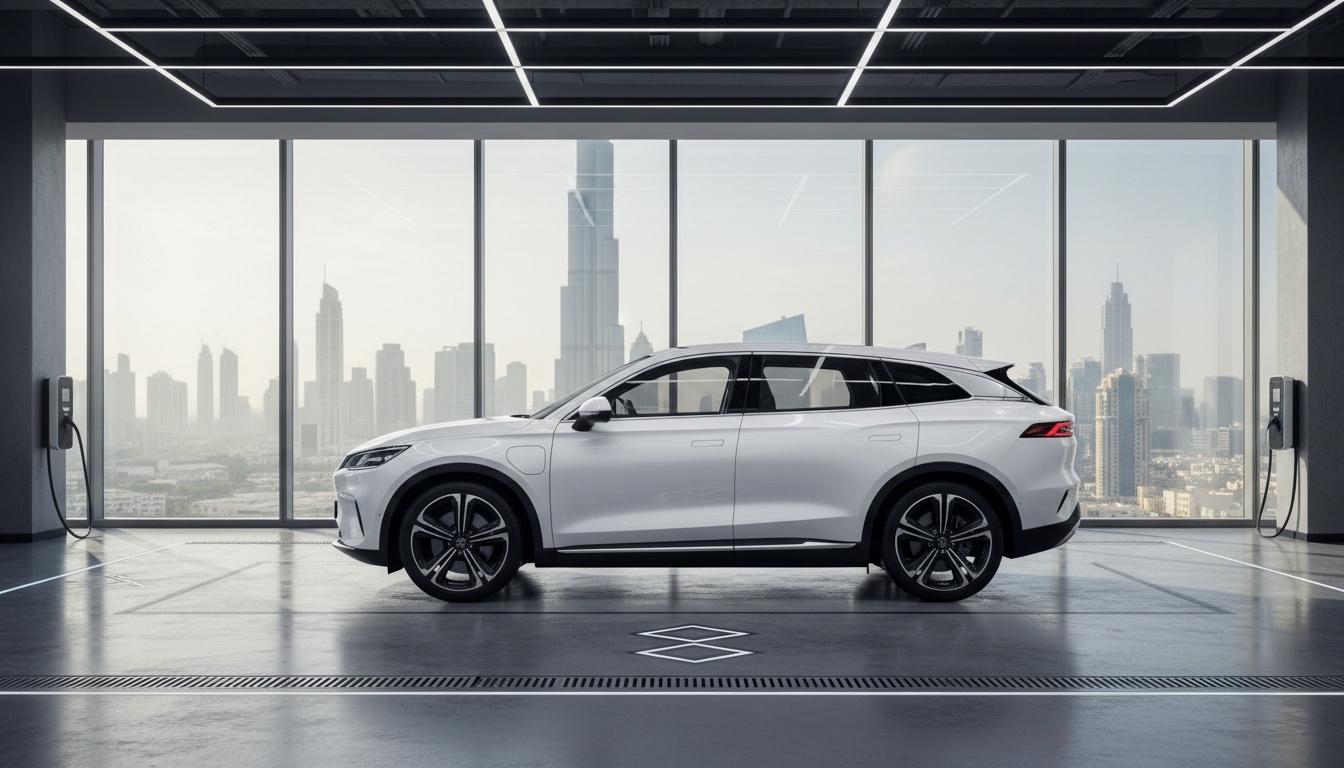
Integrated die-casting technology is transforming how Chinese EVs are built — but it's also reshaping how insurers assess damage claims in the UAE. If you own a BYD, MG, or Geely, understanding what happens when your chassis is compromised could save you thousands of dirhams. [Compare motor insurance plans](https://www.esanad.com/motor-insurance) before your next renewal to ensure you're genuinely protected.
Understanding Structural Die-Casting: Why EV Chassis Are Different
Traditional vehicles are assembled from hundreds of individually stamped and welded steel components. If one section is damaged, repair workshops can replace it in isolation. Integrated die-casting — or gigacasting — changes this entirely. A single aluminium casting can replace up to 70 separate parts, forming the entire front or rear underbody in one piece.
For Chinese EV manufacturers like BYD and Geely, this reduces manufacturing costs and vehicle weight. However, UAE repair workshops — even authorised dealerships — rarely possess the specialised friction stir welding equipment or OEM-certified tooling needed to repair these sections. The result? A minor rear-end collision that would cost AED 3,000 to fix on a conventional saloon can trigger a constructive total loss declaration on a gigacast EV.
Understanding this technical reality is the first step toward choosing adequate cover. Drivers should also review agency repair terms for Chinese cars in the UAE before signing any policy.
The 2026 Challenge: Structural Failures and Chinese EV Brand Longevity
The global Chinese EV market is experiencing a significant shakeout in 2026. Several second-tier brands have exited or scaled back UAE operations, creating a parts availability crisis that directly affects insurance claims. When a manufacturer withdraws, authorised service centres close, OEM structural components become unavailable, and agency repair clauses in your policy become worthless.
UAE underwriters are responding. According to guidelines aligned with the Central Bank of the UAE's insurance regulatory framework, insurers are increasingly scrutinising claims involving brands with uncertain long-term market presence. Vehicles without GCC-specification certification from the Ministry of Industry and Advanced Technology (moiat.gov.ae) face additional claim hurdles — particularly for structural damage.
Key 2026 risks for Chinese EV owners include:
- Parts unavailability triggering automatic total loss declarations
- Agency repair add-ons that cannot be honoured if the brand exits
- Depreciation-accelerated payouts that leave owners with negative equity
- Grey-market spec vehicles being refused structural claims entirely
For context on non-GCC spec risks, the detailed guide on insuring non-GCC spec EVs in the UAE covers how grey-market status affects claim eligibility.
Insurance Impact: Agency Repair vs. Total Loss for Integrated Frames
This is where the financial stakes become concrete. The table below illustrates how integrated chassis designs shift claim outcomes dramatically.
| Feature | Traditional Modular Chassis | Integrated Die-Cast Chassis |
|---|---|---|
| Repairability | High — individual parts replaced | Low — entire section often scrapped |
| Premium Impact | Standard market rates | Higher due to salvage complexity |
| Claim Type | Minor or major repair common | Frequent constructive total loss |
| Agency Repair Viability | Widely available | Limited to select authorised centres |
| Parts Availability | 10+ years typically | Uncertain if brand exits market |
When a gigacast section is declared irreparable, the insurer pays the insured value minus depreciation and excess. For a two-year-old Chinese EV that has depreciated 35–40%, this payout may fall well below what you still owe on a finance agreement — a gap that standard comprehensive policies do not cover.
The Sanadak financial consumer protection ombudsman can mediate disputes between policyholders and insurers over total loss valuations. Documenting your vehicle's structural specification at purchase is strongly advised.
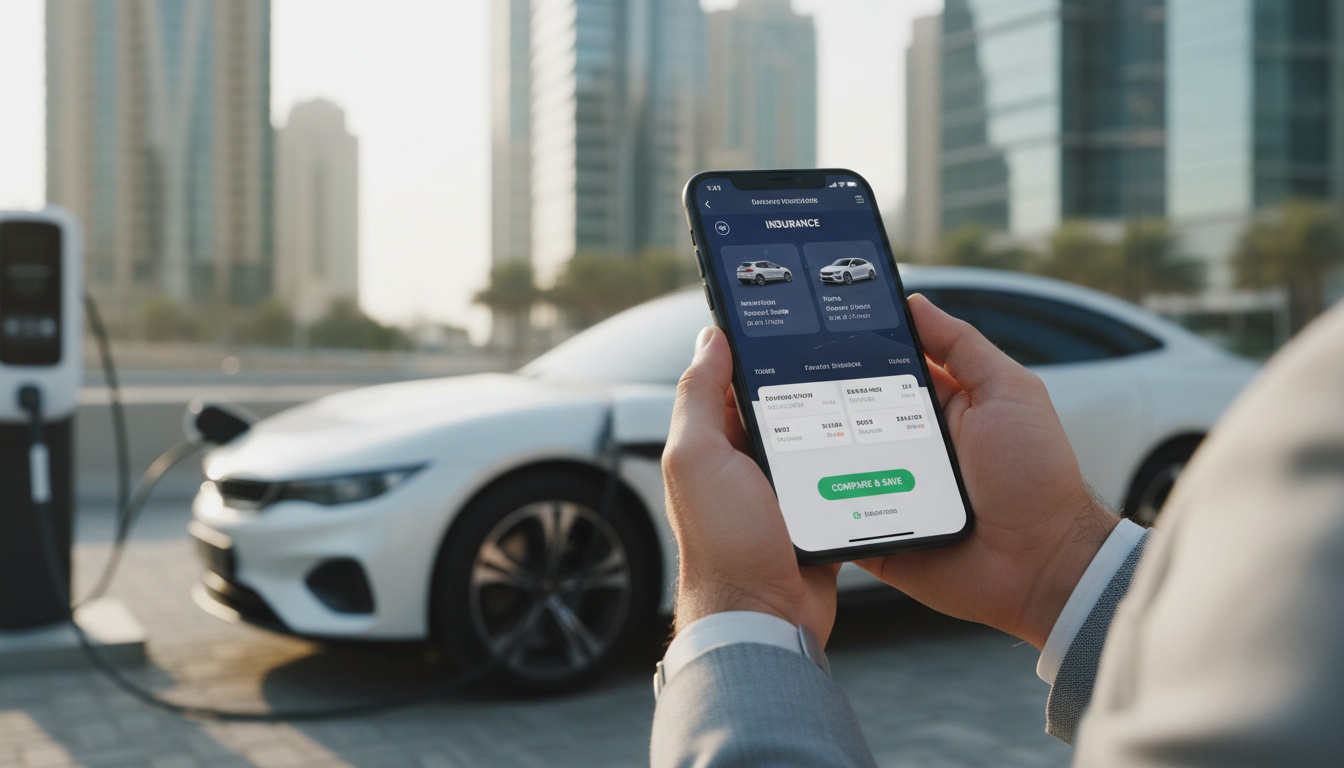
Compare & Choose on eSanad
Key Considerations for Insuring Chinese EVs in the UAE
Choosing the right policy for a gigacast Chinese EV requires more than comparing premiums. Here is what UAE owners must evaluate in 2026:
1. Confirm GCC Specification Ensure your vehicle carries full GCC-spec certification. Non-compliant vehicles face claim denials on structural damage. Cross-reference with the RTA registration records at rta.ae.
2. Scrutinise Agency Repair Terms Agency repair cover is only valuable if the brand maintains a UAE service network. Review MG and Haval agency repair limits in 2026 to understand current coverage boundaries for popular Chinese brands.
3. Assess Gap Cover If your EV is financed, standard comprehensive cover may pay out less than your outstanding loan balance after a total loss. Gap insurance bridges this difference — particularly relevant for models experiencing rapid depreciation.
4. Check Battery and Structural Exclusions Some policies exclude "manufacturing defects" from structural claims. If a casting crack develops without a collision, you may need to escalate to the manufacturer's warranty rather than your insurer.
5. Compare Renewal Terms Annually Market conditions for Chinese EVs are shifting monthly. Use eSanad's motor insurance platform to compare renewal quotes and ensure your sum insured reflects current market value, not last year's price.
Get a Free Quote Now
Conclusion
Bottom line: Integrated die-casting makes Chinese EVs lighter and cheaper to manufacture — but significantly more expensive and complex to insure in the UAE. In 2026, brand longevity risks, parts availability gaps, and total loss thresholds make policy selection critical for BYD, MG, and Geely owners. Review your cover carefully, confirm GCC compliance, and ensure your insured value reflects real market depreciation.
Short Summary: Gigacasting in Chinese EVs turns minor crashes into total loss claims in the UAE — here's what your 2026 policy must cover.
Meta Description: Chinese EV chassis failures in UAE 2026: why gigacasting triggers total loss claims, how agency repair cover is at risk, and how to protect yourself.
Slug: chinese-ev-chassis-failures-insurance-uae-2026
FAQ
Does UAE comprehensive insurance cover chassis cracks in Chinese EVs?
It depends on the cause. Collision-related structural damage is typically covered under comprehensive motor insurance. However, cracks resulting from manufacturing defects are usually handled under the manufacturer's warranty, not the insurance policy. Always review your policy's exclusions clause carefully.
What happens to my agency repair cover if the Chinese EV brand exits the UAE market?
If an authorised service network closes, agency repair clauses in your policy become unenforceable in practice. Your insurer would typically default to non-agency repair. The Sanadak ombudsman can intervene in disputes over cover honouring when a brand exits.
Why are insurance premiums higher for EVs with integrated die-cast structures?
Because a minor structural deformation can trigger a constructive total loss, insurers carry a higher claims risk per incident. This risk is priced into premiums — particularly for models where UAE repair workshops lack gigacasting repair capabilities.
Can I claim for a structural failure if there was no collision involved?
Generally no — spontaneous structural failure is treated as a manufacturing defect and falls under the vehicle warranty, not motor insurance. Under the UAE Unified Motor Policy, an insurable event typically requires an external, accidental cause.
Is gap insurance necessary for Chinese EVs with high depreciation?
For financed Chinese EVs, gap insurance is strongly advisable in 2026. Rapid depreciation combined with constructive total loss payouts can leave owners owing more to a finance company than they receive from their insurer. Check gap cover availability when comparing plans on eSanad.
Editorial note: This article is for general information and does not constitute insurance advice. Always confirm terms with your insurer.