

Motor Insurance
EV Smart Summon Accidents UAE: Who is Liable in 2026?
Smart Summon and remote parking features are now standard on Tesla, BYD, and Geely EVs sold in the UAE — but what happens when your car moves without you and hits something? Before you activate that feature in a Dubai mall parking lot, understand exactly who bears the financial and legal liability. Explore your [motor insurance options](https://www.esanad.com/motor-insurance) before your next driverless maneuver costs you.
Understanding EV Smart Summon: How Level 2+ Automation Works in the UAE
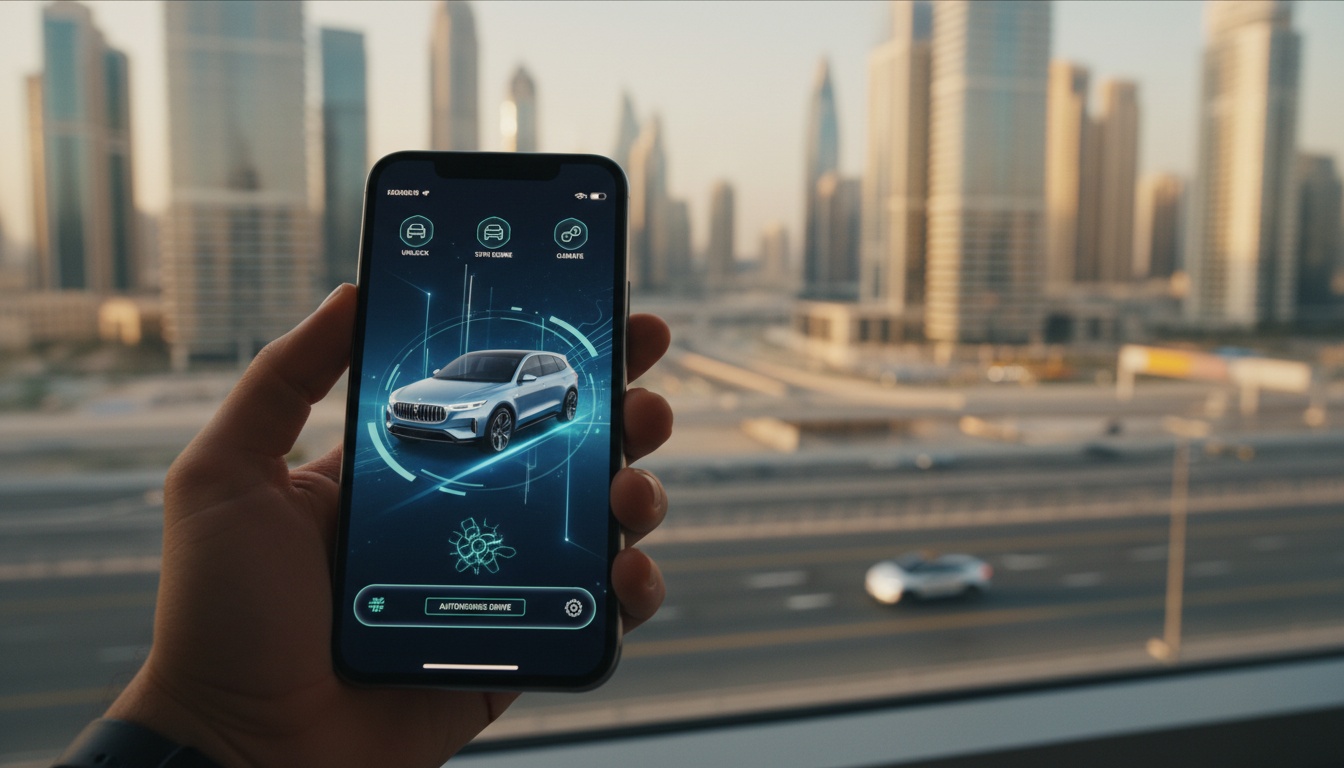
Tesla's Smart Summon, BYD's Remote Parking Assist, and Geely's Auto Park are all classified as Level 2+ driver assistance systems — not fully autonomous driving. This distinction is legally critical in the UAE. These features move the vehicle without an occupant but still require the registered owner to remain within line-of-sight and maintain active control via a smartphone app.
The Road and Transport Authority (RTA) has not issued a dedicated regulatory framework for Level 2+ remote vehicle operation as of March 2026, meaning these features technically operate under existing traffic regulations. Under UAE Federal Traffic Law, any moving vehicle on public or shared private property must have an accountable "driver."
UAE Smart City infrastructure — particularly Dubai's 5G-connected parking networks — reduces the latency risk of remote commands. However, signal interruptions during a summon maneuver remain a real hazard that insurers are beginning to scrutinize closely.
Chinese EV owners should also review Agency Repair coverage for Chinese cars in UAE 2026, as sensor recalibration costs post-collision can be significant.
Liability Breakdown: Who Is Legally "Driving" During a Remote Summon?
Under current UAE law, the registered owner is the default liable party whenever a vehicle causes damage — regardless of whether they were physically inside it. The logic is straightforward: you initiated the command, you are the operator.
Here is how liability is typically distributed across common scenarios:
| Scenario | Primary Liable Party | Insurance Coverage Impact |
|---|---|---|
| Smart Summon in private parking (mall, tower) | Registered Owner / Driver | Comprehensive policy applies; excess payable |
| System malfunction / software bug mid-summon | Owner first; manufacturer dispute secondary | UAE Unified Policy has no "system error" exemption |
| Remote operation on public roads (RTA jurisdiction) | Registered Owner | Potential policy voidance; RTA fine possible |
| Third-party vehicle moves into summon path | Shared / Contributory fault | Claim dispute; dashcam evidence critical |
The UAE Central Bank's Unified Motor Vehicle Insurance Policy does not contain a specific carve-out exempting policyholders from liability due to automated system errors. This means you cannot shift blame to the software when filing a standard insurance claim. Manufacturer liability claims are a separate civil matter and do not replace your insurance obligation to the third party.
Insurance Coverage Analysis: Comprehensive vs. Third-Party for Autonomous Incidents
Your choice of motor insurance cover directly determines whether a Smart Summon collision leaves you financially exposed.
Third-Party Only (TPL): Covers damage your vehicle causes to another person's property or vehicle. It does not cover damage to your own EV — including costly sensor arrays, LiDAR units, or camera clusters that may be destroyed in even a low-speed summon collision.
Comprehensive Cover: Pays for damage to both your vehicle and third parties. For EV owners using automation features, this is the only sensible option. Critically, ensure your policy includes an Agency Repair rider, which guarantees manufacturer-certified technicians handle sensor recalibration — a non-negotiable for BYD, Tesla, and Geely vehicles where ADAS recalibration is mandatory after any body contact.
Drivers can compare motor insurance plans on eSanad to identify comprehensive policies with EV-specific riders before renewing.
Also relevant: review the EV flood damage and battery insurance claims guide for UAE 2026 to understand how electronic damage exclusions may affect your claim assessment.
Compare & Choose on eSanad
Critical Factors Affecting Claim Approval for Driverless Crashes
If a Smart Summon incident occurs, your claim outcome hinges on several UAE-specific factors:
Black box and dashcam data — Tesla Sentry Mode footage and BYD's onboard event data recorder are treated as primary evidence in RTA accident reports. Preserve this data immediately.
Location of the incident — Private parking garages typically place liability with the driver. Public roads shift the incident into RTA jurisdiction, where an unmanned vehicle may trigger additional fines from the Ministry of Interior.
Active monitoring evidence — Insurers and courts will ask: were you within sight of the vehicle? Were you actively watching the app? Failure to demonstrate active monitoring weakens your position significantly.
Policy endorsements — Check if your insurer has added any 2026 ADAS-specific exclusion clauses. Some insurers now issue endorsements excluding coverage for incidents where automation features were active.
Agency Repair inclusion — Without this rider, post-crash sensor recalibration costs are out-of-pocket. For Chinese EVs, also check MG and Haval agency repair limits in UAE 2026 to understand manufacturer service network limitations.
Get a Free Quote Now
Conclusion
Bottom line: In the UAE's 2026 legal landscape, Smart Summon and remote parking features place liability squarely on the registered owner — not the software. Comprehensive motor insurance with an Agency Repair rider is essential for any EV owner using automation features. Review your policy terms now, before a driverless maneuver becomes a costly out-of-pocket claim.
Short Summary: Smart Summon crash in UAE? Learn who pays, how insurance applies, and what EV owners must do in 2026.
Meta Description: EV Smart Summon accident in UAE — find out who is legally liable, how insurance covers driverless crashes, and what to do in 2026.
Slug: ev-smart-summon-accidents-liability-insurance-uae-2026
FAQ
Does UAE car insurance cover accidents if I am not inside the vehicle?
Generally, yes — comprehensive policies cover damage caused by your vehicle even during remote operation. However, the claim may be contested if your insurer includes ADAS exclusion clauses, so always verify your policy wording in advance.
Is the manufacturer liable if EV sensors fail during a Smart Summon?
Manufacturer liability is a separate civil claim and does not replace your primary insurance obligation to third parties. The UAE Unified Motor Policy contains no "system error" exemption, meaning your insurer pays first and may pursue the manufacturer separately.
What does the UAE Unified Motor Policy say about driverless operation?
The Central Bank of the UAE's Unified Policy does not include provisions specifically addressing Level 2+ automation or remote summon features. This means standard liability rules apply — the registered owner is responsible for all vehicle actions.
Can the RTA fine me for an unmanned vehicle collision in a mall parking lot?
Private mall parking lots fall outside direct RTA jurisdiction, but incidents on shared access roads within a complex may attract Ministry of Interior attention. Using summon features on public roads is a higher risk and could result in traffic violations.
Will my premium increase after a Smart Summon insurance claim?
Yes — any at-fault claim typically affects your No-Claims Bonus and can raise renewal premiums. Review the NCB transfer guide for UAE 2026 to understand how to protect your discount when switching insurers.
Editorial note: This article is for general information and does not constitute insurance advice. Always confirm terms with your insurer.