

Health Insurance
UAE Visitor Insurance 2026: Parents Eid Visit and 3000 AED Rule

Planning to host your parents for Eid Al-Fitr or Eid Al-Adha this year? As a UAE sponsor, you'll need to navigate two distinct financial requirements: the traditional 3,000 AED proof of funds and the newly mandatory 2026 visitor health insurance. While both serve important purposes, understanding how they work together—and why insurance is your ultimate safety net—can save you from unexpected financial strain and ensure your family celebration remains stress-free.
Understanding the 2026 Visitor Mandates: The 3,000 AED Rule and Mandatory Insurance
The UAE's visitor entry requirements have evolved significantly in 2026, creating a dual-layer protection system for sponsors and guests alike. The Federal Authority for Identity, Citizenship, Customs & Port Security continues to enforce the 3,000 AED (or equivalent) proof of solvency requirement for certain visa categories, ensuring visitors can financially support themselves during their stay.
However, the game-changing development for 2026 is the mandatory health insurance requirement for all visitors entering the UAE. Effective January 1, 2026, every visitor—including your parents—must carry DHA (Dubai Health Authority) or DOH (Department of Health Abu Dhabi) compliant insurance coverage for the entire duration of their visit.
Key distinctions between the two requirements:
- 3,000 AED Rule: Proof of available funds (bank statement, credit card limit, or cash declaration) shown at entry
- Health Insurance Mandate: Active policy covering medical emergencies, hospitalization, and repatriation throughout the stay
- Legal Responsibility: The sponsor (you) remains liable for your visitor's welfare and any uncovered medical expenses
For residents hosting elderly parents, particularly those traveling from regions with limited healthcare infrastructure, securing compliant health insurance isn't just a bureaucratic checkbox—it's financial risk management.
Visa Sponsorship Requirements for Parents: Salary Thresholds and Document Checklists
Before your parents can board their Eid flight, you'll need to meet specific sponsorship criteria set by UAE immigration authorities. The financial thresholds remain consistent in 2026:
Minimum Salary Requirements:
- Standard sponsorship: AED 4,000 per month OR
- With company-provided accommodation: AED 3,000 per month plus accommodation letter
Essential Document Checklist:
- Sponsor's Documents:
- Valid UAE residence visa and Emirates ID
- Salary certificate (not older than 3 months)
- Tenancy contract (Ejari-registered in Dubai)
- Bank statements (last 6 months)
- Passport copy
- Visitor's Documents:
- Original passport (minimum 6 months validity)
- Passport-size photographs (white background)
- Mandatory: Visitor health insurance policy certificate
- Proof of relationship (birth certificate, family book)
- Marriage certificate (if sponsoring in-laws)
- Financial Proof:
- Bank statement showing 3,000 AED minimum balance
- Credit card with available limit statement
- Or cash declaration form
Immigration officers at Dubai International or Abu Dhabi International may verify insurance status electronically through the Dubai Health Authority portal, so ensure your policy is active and uploaded to the system before travel.
Financial Protection: Why the 3,000 AED Entry Fund is Not a Substitute for Health Coverage
Here's the critical misconception that catches many sponsors off-guard: the 3,000 AED entry fund is intended for daily living expenses—accommodation upgrades, dining, entertainment, and transportation. It is not designed to cover medical emergencies, which can easily exceed AED 50,000 for a single hospitalization.
Real-world scenario: Your 68-year-old father experiences chest pain during Eid prayers. A private hospital ER visit includes:
- Emergency room consultation: AED 1,500
- ECG and cardiac enzyme tests: AED 2,000
- 48-hour observation in ICU: AED 8,000/day = AED 16,000
- Specialist consultation: AED 1,200
- Total: AED 20,700 (and this is before any procedures)
Without comprehensive visitor insurance, that 3,000 AED fund disappears in hours, leaving you personally liable for the balance.
Entry Funds vs. Visitor Health Insurance: Key Differences
| Feature | 3,000 AED Entry Fund | Visitor Health Insurance (2026 Mandate) |
|---|---|---|
| Legal Purpose | Proof of solvency for stay duration | Mandatory medical risk mitigation |
| Usage | Daily expenses, accommodation, leisure | In-patient/Emergency medical bills |
| Protection Limit | Capped at the cash amount | Direct billing up to policy limits (150k-500k AED) |
| Replenishment | Depletes with spending | Renewed coverage per incident (within limits) |
| Government Requirement | Immigration entry condition | DHA/DOH compliance mandate |
| Host Liability | No legal protection for sponsor | Transfers medical financial risk to insurer |
Smart sponsors view the 3,000 AED as "pocket money" for the visit, while insurance serves as the genuine financial safety net protecting both parties from medical bankruptcy.
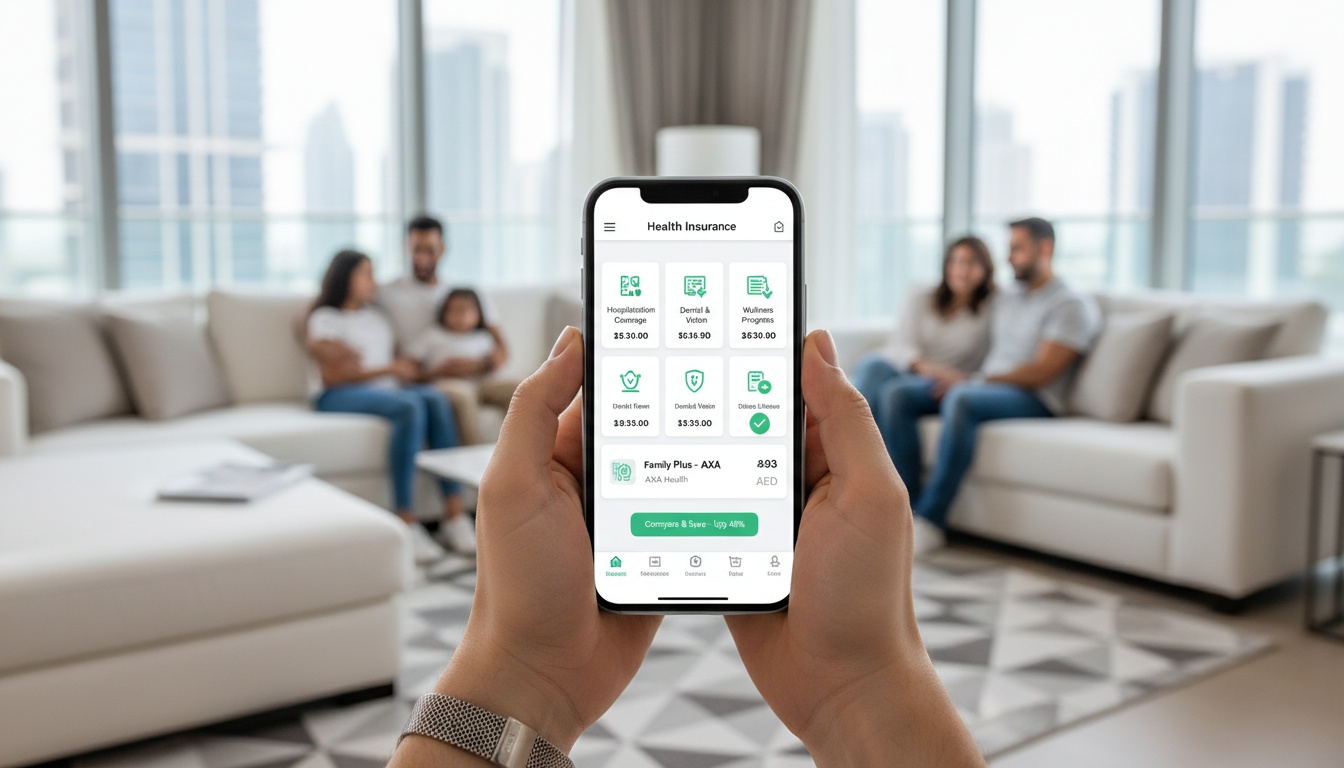
Compare & Choose on eSanad
Essential Coverage Features for Senior Visitors: IPD, OPD, and Pre-existing Conditions
When selecting visitor health insurance for elderly parents, the policy's coverage depth matters far more than its premium cost. In 2026, DHA and DOH have standardized minimum requirements, but smart sponsors look beyond the baseline.
Non-Negotiable Coverage Components:
1. In-Patient Department (IPD) Coverage
Minimum required limit: AED 150,000 (DOH/DHA standard) Recommended for seniors: AED 500,000+
IPD covers:
- Hospital room charges
- Surgical procedures
- ICU/CCU admission
- Emergency stabilization
- Ambulance services
2. Out-Patient Department (OPD) Coverage
While not legally mandatory for visitor visas, OPD coverage prevents out-of-pocket costs for:
- GP consultations
- Prescription medications
- Diagnostic tests (X-rays, blood work)
- Specialist referrals
3. Pre-existing Conditions
This is where most budget policies fail senior visitors. Standard visitor insurance excludes pre-existing conditions such as:
- Diabetes
- Hypertension
- Heart disease
- Chronic respiratory conditions
2026 Solutions:
- Premium visitor plans now offer limited pre-existing coverage after a waiting period (typically 30-90 days)
- Emergency stabilization of pre-existing conditions is often included even in basic plans
- Disclose all conditions during application to avoid claim rejection
4. Emergency Medical Evacuation and Repatriation
New 2026 mandate: All visitor policies must include:
- Medical evacuation to home country if UAE treatment is unavailable
- Repatriation of remains (minimum AED 15,000 coverage)
You can explore comprehensive visitor health coverage options through trusted health insurance comparison platforms that allow you to filter by age, pre-existing conditions, and coverage limits.
Get a Free Quote Now
Step-by-Step Checklist for Hosting Parents during Eid 2026
8 Weeks Before Arrival:
- ☐ Verify your salary meets sponsorship threshold (AED 4,000 or 3,000 + accommodation)
- ☐ Collect all required sponsor documents (Emirates ID, salary certificate, Ejari)
- ☐ Request parents' passport copies and relationship proof documents
6 Weeks Before Arrival:
- ☐ Purchase visitor health insurance (minimum 150k AED IPD coverage)
- ☐ Upload insurance certificate to ICP visa application portal
- ☐ Arrange 3,000 AED proof of funds (bank statement or credit card limit)
4 Weeks Before Arrival:
- ☐ Submit complete visa application through typing center or ICP portal
- ☐ Pay visa processing fees (approximately AED 1,000-1,200 per parent)
- ☐ Receive entry permit approval and share with parents
2 Weeks Before Arrival:
- ☐ Book flights during off-peak hours to avoid Eid airport congestion
- ☐ Print insurance policy certificate for airport presentation
- ☐ Prepare accommodation (hotel booking or home address proof)
At Airport Arrival:
- ☐ Parents present passport, entry permit, insurance certificate, and 3,000 AED proof
- ☐ Collect stamped entry visa (14-day or 30-day visitor stamp)
- ☐ Register with insurance provider's UAE network (activate policy)
During Visit:
- ☐ Save insurer's 24/7 emergency hotline in parents' phones
- ☐ Carry insurance card for all medical facility visits
- ☐ Keep digital and physical copies of policy certificate
Before Departure:
- ☐ Settle any outstanding medical bills (if policy had co-payments)
- ☐ Request claim reimbursement for any out-of-pocket expenses
- ☐ Cancel policy or request refund for unused days (if policy allows)
Explore eSanad →
Conclusion
Bottom line: Hosting your parents for Eid 2026 requires strategic planning around two distinct financial safeguards: the 3,000 AED proof of funds serves as a solvency check for daily expenses, while mandatory visitor health insurance protects both you and your loved ones from catastrophic medical costs that could otherwise devastate family finances. By treating insurance as the primary safety net—not the cash fund—you ensure that your Eid celebration focuses on family, faith, and gratitude rather than financial anxiety.
Get Your Health Insured Instantly
FAQ
Is the 3,000 AED fund still required if I have comprehensive insurance for my parents?
Yes. The 3,000 AED entry fund and health insurance are separate legal requirements. Immigration authorities may verify both at the port of entry. The cash fund demonstrates general financial solvency for living expenses, while insurance specifically mitigates medical risk. Having comprehensive health insurance coverage does not waive the cash proof requirement.
Does the 2026 visitor insurance cover pre-existing conditions for elderly parents?
Standard visitor policies typically exclude pre-existing conditions. However, premium 2026 plans now offer limited coverage for chronic conditions after a waiting period (30-90 days), and emergency stabilization of pre-existing conditions is often included in basic plans. Always disclose pre-existing conditions during application to ensure claim validity.
Can I use my own employer's group plan to cover my visiting parents?
No. Employer-sponsored group health insurance covers only the employee and their UAE-resident dependents listed on the residency visa. Visitors require separate visitor health insurance policies compliant with DHA/DOH 2026 standards. Check with your HR department about corporate visitor policy discounts.
What happens if my parents' visitor visa is extended beyond the initial insurance period?
You must extend or renew the health insurance policy to match the new visa validity period. UAE immigration will not approve visa extensions without proof of continuous insurance coverage. Most insurers offer extension options with pro-rated premiums; arrange this before the original policy expires to avoid coverage gaps.
Is there a specific 'Eid' surcharge or waiting period for visitor policies in 2026?
No. Insurance premiums are based on age, coverage limits, and policy duration—not travel dates. However, policies purchased during peak Eid travel periods may have longer activation times (24-48 hours instead of instant), so buy insurance at least 72 hours before your parents' departure to ensure active coverage at arrival.
What is the minimum medical coverage limit required by the ICP for 2026 entry?
The Federal Authority for Identity, Citizenship, Customs & Port Security mandates a minimum of AED 150,000 in-patient coverage for all visitor health insurance policies in 2026. This aligns with DOH and DHA standards. For elderly visitors or those with pre-existing conditions, financial advisors recommend coverage limits of AED 500,000 or higher.
Editorial note: This article is for general information and does not constitute insurance advice. Always confirm terms with your insurer.