

Motor Insurance
Silent EV Accidents UAE 2026: New Liability Rules Explained
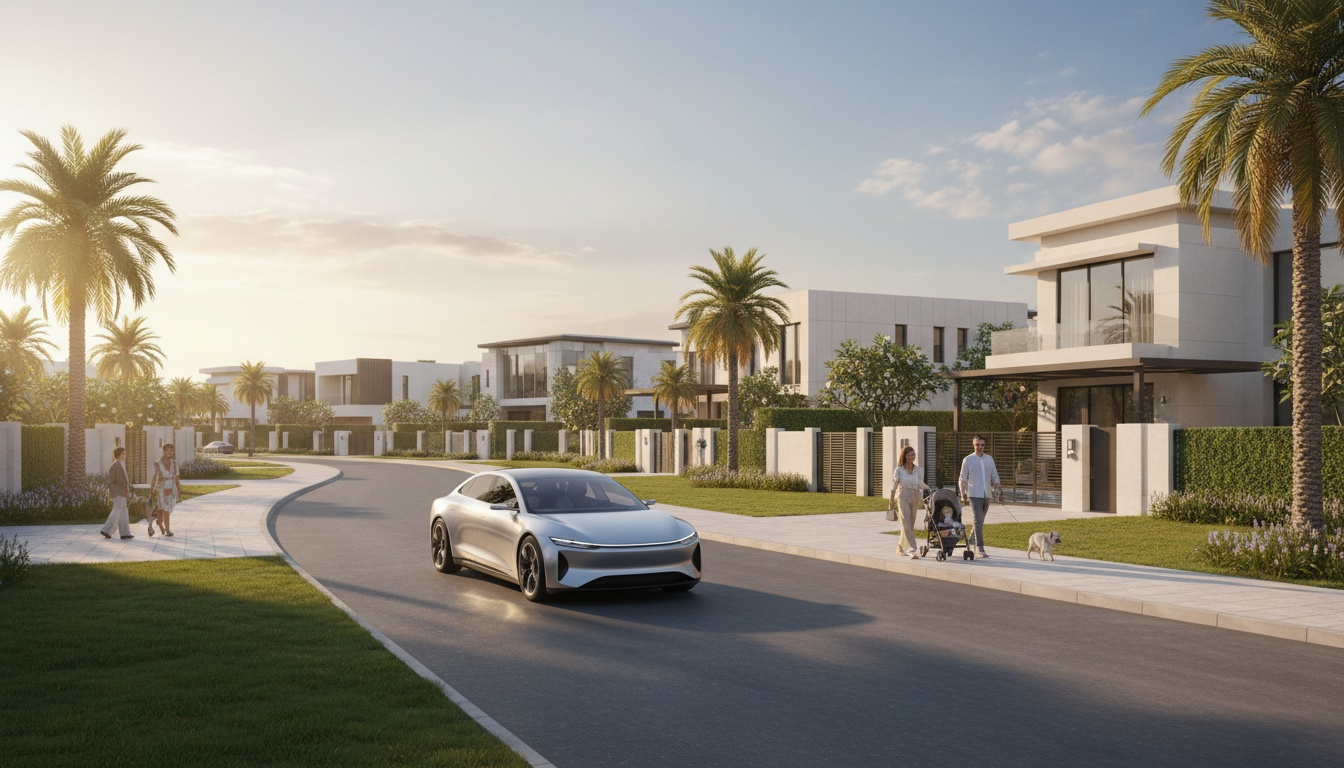
Electric vehicles are transforming UAE roads — but their near-silent operation creates a hidden danger in residential zones. With Law No. 2 of 2026 now in effect, EV owners face stricter liability standards when accidents occur near homes, schools, and gated communities. This guide explains the new 2026 rules, what they mean for your motor insurance policy, and exactly how to protect yourself.
Understanding Silent EV Accidents: Why Residential Areas are High-Risk Zones
Unlike petrol vehicles, electric vehicles generate almost no engine noise at speeds below 30 km/h — precisely the speeds common in residential streets, Emaar developments, Nakheel communities, and school zones. Pedestrians, cyclists, and children relying on sound cues to detect approaching vehicles are particularly vulnerable.
The UAE's Roads and Transport Authority (RTA) has flagged residential "quiet zones" as disproportionately affected. Studies from comparable markets show pedestrian-EV incidents occur at nearly twice the rate of equivalent petrol-vehicle encounters in low-speed environments.
To address this, the UAE mandated Acoustic Vehicle Alerting Systems (AVAS) — devices that emit artificial warning sounds at low speeds — for all registered EVs. Vehicles without a functioning AVAS are now non-compliant, creating direct insurance consequences following any incident.
EV owners should also understand that standard collision scenarios may differ significantly from legacy motor claims — particularly for newer models from Chinese manufacturers, where Chinese EV chassis failures and UAE insurance implications in 2026 are an emerging concern for adjusters.
The 2026 UAE Liability Framework: Who is at Fault in a 'Silent' Collision?
Law No. 2 of 2026, which aligns with updates to the UAE Civil Code published by the Ministry of Justice, introduces a strict liability standard for EV drivers involved in residential-zone pedestrian incidents. This is a fundamental shift from the contributory negligence model previously applied.
Under the 2026 framework:
- Strict driver liability applies when an EV strikes a pedestrian in a designated residential or quiet zone
- The burden of proof reverses: drivers must demonstrate the pedestrian's fault — not merely that they were driving lawfully
- Fines for AVAS non-compliance or safety protocol violations start at AED 3,000
- Dashcam footage, AVAS activation logs, and telematics data are now considered primary evidence in motor claims
This matters enormously for insurance. If you hold only third-party cover, a liability judgment under the new strict standard could expose you to out-of-pocket costs well beyond policy limits. Drivers should review whether their policies reflect these changes — eSanad's EV and hybrid insurance options include plans updated for 2026 regulatory requirements.
Comparing Liability: 2026 Rules vs. Previous Motor Insurance Standards
The table below illustrates how liability determinations have changed for common residential EV incident scenarios:
| Scenario | Pre-2026 Liability Standard | 2026 New Law Implementation |
|---|---|---|
| Pedestrian struck in residential street | Contributory negligence (shared fault possible) | Strict driver liability (presumed fault) |
| Child running into EV path | Driver partially excused | Driver must prove child's sole fault |
| AVAS disabled or malfunctioning | Not a standard claim factor | Automatic fault aggravation; AED 3,000+ fine |
| GCC-spec EV with factory AVAS | No distinction in claims | Presumption of compliance; stronger driver defence |
| Non-GCC imported EV without AVAS | Treated like any vehicle | Non-compliant; strict liability applies with no mitigation |
The distinction between GCC-specification and non-GCC imported EVs is significant. GCC-spec vehicles from brands such as BYD, Tesla, and MG typically arrive with AVAS pre-installed. Non-GCC imports may lack this system entirely, removing a key legal defence.
For drivers managing renewals and wanting to understand how these changes affect their existing cover, the guide on understanding motor insurance renewal in Dubai and Abu Dhabi outlines what to review before your next policy cycle.

Compare & Choose on eSanad
Essential Checklist for EV Owners: Protecting Your Legal and Financial Interests
Being proactive before an incident is your strongest protection. Use this checklist:
- Verify AVAS functionality — test your system monthly and keep a maintenance record
- Install a front and rear dashcam — dashcam footage is now primary evidence under 2026 RTA guidelines
- Check your policy wording — confirm it explicitly covers strict liability pedestrian claims in residential zones
- Upgrade from third-party to comprehensive cover — compare motor insurance plans to find comprehensive options that include liability extensions
- Confirm your EV's spec classification — verify with your dealer whether your vehicle is GCC-spec and AVAS-compliant
- Document telematics data — some insurers now accept telematics logs as corroborating evidence of safe driving behaviour
- Review your community rules — Emaar, Nakheel, and Damac communities may impose additional speed or noise restrictions beyond RTA minimums
Related to this, EV owners should understand the full spectrum of coverage gaps — including incidents involving EV frunk cargo and electronics coverage in the UAE in 2026 — to ensure no aspect of their vehicle is uninsured.
Get a Free Quote Now
Conclusion
Bottom line: The 2026 UAE liability framework fundamentally changes the risk landscape for electric vehicle owners in residential areas. Silent EV accidents are no longer treated like ordinary motor incidents — strict liability, reversed burdens of proof, and AVAS compliance requirements mean your insurance policy must be specifically structured to protect you. Review your cover today, ensure your AVAS is functional, and upgrade to comprehensive protection if needed.
Short Summary: UAE's 2026 strict liability rules for silent EV accidents in residential zones — what EV owners must know about AVAS, fault, and motor insurance cover.
Meta Description: Silent EV accidents in UAE residential areas now trigger strict liability under 2026 law. Learn AVAS rules, fault standards, and how to protect your motor insurance cover.
Slug: silent-ev-accidents-uae-2026-liability-rules-residential
FAQ
Are EV owners liable if the car's pedestrian warning sound was disabled?
Yes. Under 2026 UAE law, a disabled or non-functional AVAS is treated as an aggravating factor that strengthens the presumption of driver fault. Owners may also face an additional fine starting at AED 3,000 for the non-compliance violation itself.
Does UAE third-party insurance cover silent accidents in gated communities?
Third-party insurance covers damage to others but may have policy limits insufficient for strict liability judgments under the 2026 framework. Comprehensive cover with explicit residential-zone liability clauses provides stronger protection — compare options at eSanad.
How does the 2026 Public Safety Law affect EV insurance premiums?
Insurers are beginning to price AVAS compliance into risk assessments. Non-compliant or non-GCC-spec EVs may attract higher premiums or reduced liability cover. GCC-spec vehicles with certified AVAS may benefit from lower rates in updated 2026 policy wordings.
What evidence is required to prove a pedestrian was at fault in an EV accident?
Under the reversed burden of proof, drivers must present dashcam footage, AVAS activation logs, witness statements, and potentially telematics data showing vehicle speed and braking. The UAE Ministry of Justice guidelines confirm that digital evidence is given primary weight in 2026 residential-zone claims.
Do BYD, Tesla, and MG models sold in the UAE meet the 2026 AVAS safety standards?
GCC-specification models from BYD, Tesla, and MG sold through authorised UAE dealerships generally include factory-installed AVAS systems meeting RTA requirements. However, grey-market or non-GCC imports of the same models may not — always verify AVAS certification with your dealer before purchase.
Editorial note: This article is for general information and does not constitute insurance advice. Always confirm terms with your insurer.