

Travel Insurance
Smart Luggage Battery Bans 2026 and UAE Travel Insurance
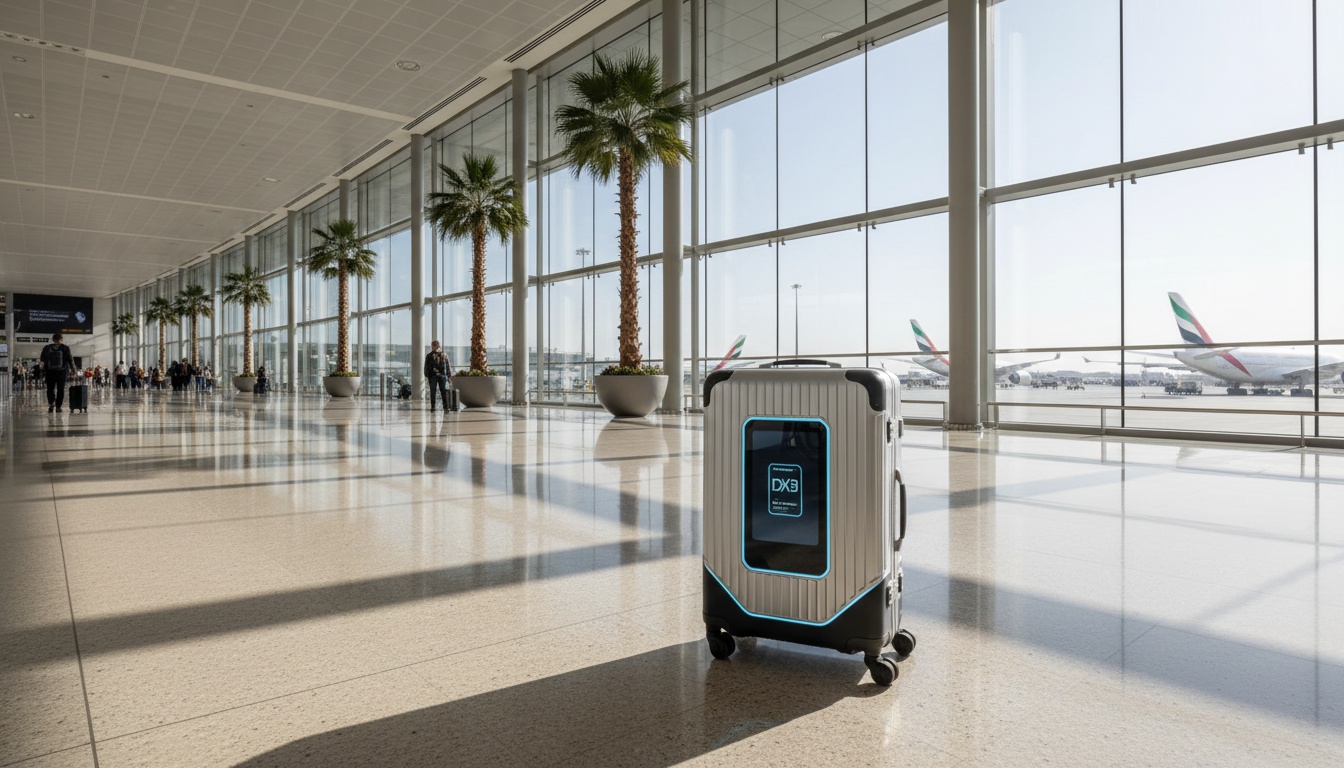
Travelling from Dubai International (DXB) or Abu Dhabi (AUH) with a high-tech smart suitcase in 2026? New airline regulations are stricter than ever — and most UAE travellers have no idea that confiscation of a banned battery voids their insurance claim entirely. Before your next flight, get the right travel insurance cover and understand exactly what is — and is not — protected.
Understanding Smart Luggage: Why Lithium Batteries Are the 2026 Primary Target
Smart luggage has evolved from a novelty into a mainstream travel essential. Built-in GPS trackers, USB charging ports, digital weight sensors, and electronic locks are now standard features in premium bags sold across UAE retail outlets and online platforms.
The critical component powering all of these features is the lithium-ion battery — the same chemistry found in laptops and e-cigarettes, and the same type that regulators at the General Civil Aviation Authority (GCAA) and IATA classify as a Dangerous Good when improperly handled.
Why the heightened focus in 2026? Incidents involving lithium battery fires in aircraft cargo holds have increased globally, prompting Emirates and Etihad to align fully with IATA's updated Dangerous Goods Regulations. The core concern is thermal runaway: once a lithium cell ignites inside a pressurised hold, suppression is extremely difficult.
If you're also wondering how other tech items like AirTags are treated at checkpoints, read our guide on AirTags and Lost Baggage Claims: UAE Travel Insurance 2026.
The 2026 Global Airline Ban: Removable vs. Integrated Battery Regulations
The single most important rule for 2026 is the Removable Battery Rule. Both Emirates and Etihad, following IATA's framework, now mandate that any smart luggage carried as checked baggage must have its lithium battery fully removed before the bag enters the hold. Bags with non-removable integrated batteries are subject to mandatory boarding denial.
Here is how the compliance landscape breaks down:
| Luggage Feature | Airline Action (2026) | Insurance Coverage Status | Recommended Action |
|---|---|---|---|
| Non-Removable Lithium Battery | Mandatory boarding denial | Excluded — policy violation | Replace with a compliant model |
| Removable Battery Left in Checked Bag | Confiscation by security | Excluded — prohibited item | Always carry battery in cabin |
| Removable Battery Carried in Cabin | Permitted (max 100Wh) | Covered for loss/damage | Keep receipt showing Wh rating |
| Smart Tag (non-lithium) | Permitted | Fully covered for loss/theft | Register tag before travel |
| GPS Tracker (USB-charged, removable) | Permitted in carry-on | Covered subject to policy limits | Declare at check-in if asked |
Emirates and Etihad cap smart luggage batteries at 100Wh — lower than the general 160Wh portable device limit, because luggage batteries are classified separately. Always check your battery's label or manufacturer specification before flying.
The Travel Insurance Loophole: Why Confiscation Is Rarely Covered
Here is where many UAE travellers are caught completely off guard. Even if you hold a comprehensive UAE travel insurance policy, confiscation of your smart luggage or its battery by airport security is almost universally excluded.
The relevant clause is called the Lawful Authority Exclusion (sometimes listed as the "Government or Regulatory Authority" exclusion). In plain language: if a government body — customs, airport security, or police — seizes your property because it violates a regulation, the insurer will not compensate you. This applies even if you were unaware of the rule.
The same logic applies to Trip Cancellation or Trip Delay claims. If your departure is delayed because security is inspecting your non-compliant luggage, insurers will deny the claim on grounds that the disruption was caused by the policyholder carrying a prohibited item. This mirrors exclusion principles discussed in our Dubai Cruise Missed Departure Insurance Clause 2026 Guide.
Additionally, Accidental Damage cover does not extend to damage caused when airline staff forcibly remove an integrated battery from your bag's chassis — because the act was a lawful regulatory requirement, not an accident.
Compare & Choose on eSanad
Pre-Flight Checklist: How to Secure Your Tech and Your Coverage
Follow this checklist before every departure from DXB or AUH with smart luggage:
- Verify battery removability. If your bag's battery cannot be detached without tools, do not check that bag. Consider replacing it with a compliant model before your trip.
- Check the Watt-hour rating. Confirm it is 100Wh or below for smart luggage. Keep the product documentation accessible.
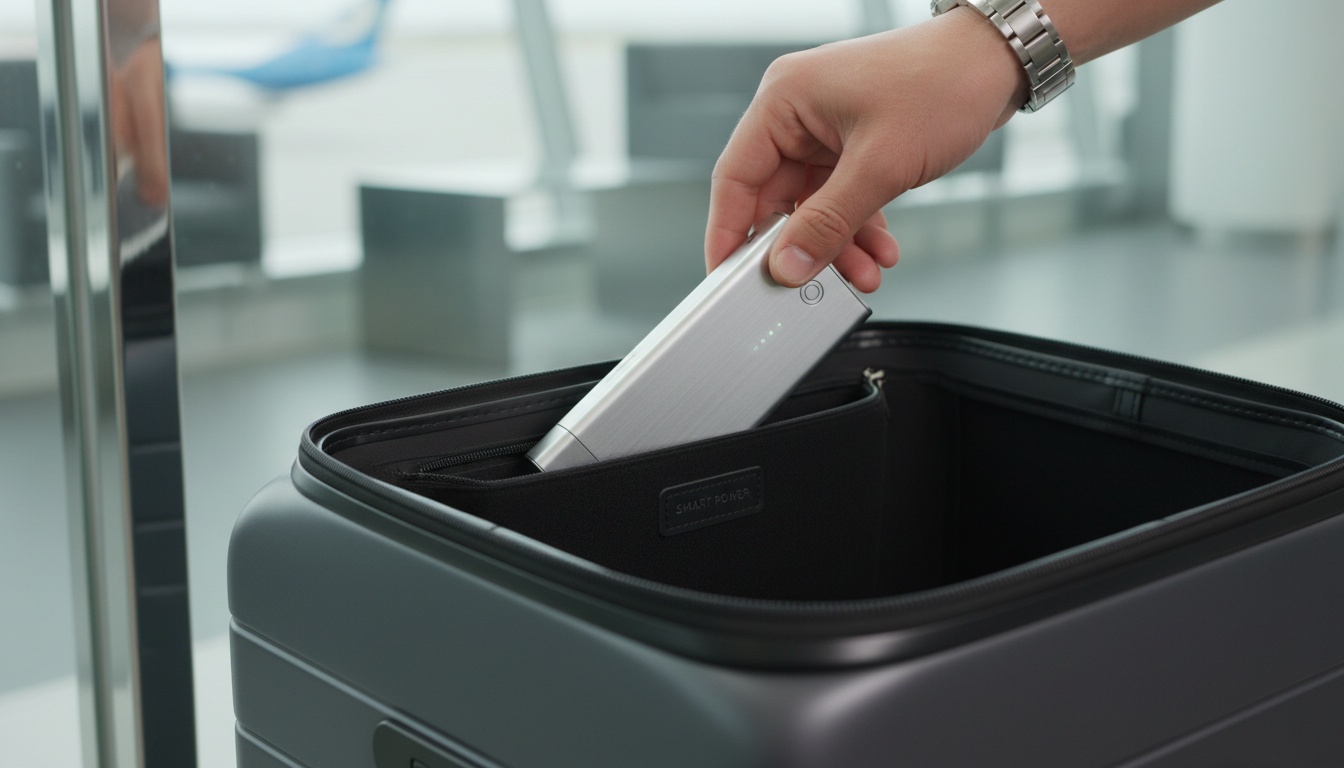
- Pack the battery in your carry-on. Once removed from the bag, the battery must travel in the cabin — never in the hold.
- Review your travel insurance exclusions. Confirm your policy does not exclude confiscation. If it does — and most do — ensure your luggage is fully compliant so the exclusion never triggers.
- Document everything. Photograph your bag, its battery compartment, and the Wh label before departure. This is critical if you later need to make any baggage or electronics claim.
- Declare tech items if in doubt. Dubai Airports' official security guidelines recommend declaring unusual battery-powered items at screening. Visit dubaiairports.ae for the latest approved items list.
Get a Free Quote Now
Conclusion
Bottom line: In 2026, the Removable Battery Rule is non-negotiable on UAE-based carriers, and the Lawful Authority Exclusion means that non-compliance leaves you with no insurance recourse whatsoever. The only safe strategy is full battery compliance before you reach the airport, combined with a travel policy that clearly covers your electronic items within regulatory boundaries.
Short Summary: Smart luggage battery bans in 2026 could void your UAE travel insurance claim — here's what every traveller from DXB and AUH must know.
Meta Description: Smart luggage battery rules for Emirates and Etihad in 2026 explained — plus the UAE travel insurance confiscation loophole you must know before flying.
Slug: smart-luggage-battery-ban-travel-insurance-uae-2026
Explore eSanad →
FAQ
Does my UAE travel insurance cover my smart suitcase if it is confiscated at Dubai International (DXB)?
Almost certainly not. Most UAE travel insurance policies contain a Lawful Authority Exclusion, which means any item seized by a government or regulatory body — including airport security — is excluded from claims. Ensuring your luggage is compliant before travel is the only protection.
What is the maximum Wh limit for luggage batteries on Etihad and Emirates in 2026?
Both airlines follow IATA Dangerous Goods Regulations and cap smart luggage batteries at 100Wh. General portable electronic devices may be permitted up to 160Wh, but smart luggage batteries are classified separately and the lower limit applies.
Can I claim for a missed flight if I am delayed due to a luggage battery inspection?
No. Trip Delay and Trip Cancellation insurance will not trigger if the cause of the delay is your own non-compliant item. Insurers treat this as a policyholder-caused disruption, which is excluded under standard UAE travel policy terms.
Is accidental damage cover applicable if airline staff forcibly remove my integrated battery?
No. Because the removal is a lawful regulatory act — not an accident — accidental damage clauses do not apply. The only recourse is to purchase compliant luggage in the first place.
Are AirTags and similar Bluetooth tracking devices included in the 2026 battery bans?
AirTags and most passive Bluetooth trackers use coin-cell batteries (CR2032), which are not classified as lithium-ion and are not subject to the smart luggage battery ban. They remain permitted in both checked and carry-on baggage in 2026.
Editorial note: This article is for general information and does not constitute insurance advice. Always confirm terms with your insurer.