

Travel Insurance
Smart Luggage Tracker Data and UAE Lost Baggage Claims 2026

Your AirTag shows your suitcase sitting in a Rome warehouse — but your UAE travel insurance provider still hasn't paid your claim. In 2026, smart luggage trackers are everywhere, yet a critical "evidence gap" exists between knowing where your bag is and legally proving it's lost. This guide explains exactly what UAE insurers require, and how to protect yourself with the right travel insurance before you fly.
Understanding Smart Luggage: How Tracker Data Intersects with Insurance Definitions
Smart luggage technology has advanced dramatically, but UAE insurance definitions haven't kept pace at the same speed. Before assuming your AirTag screenshot is a winning claim, understand how insurers define "lost baggage" in the first place.
Under standard UAE travel insurance policies, baggage is not classified as "lost" the moment it disappears. Most policies follow a two-stage process:
- Baggage Delay: Your bag is considered delayed for the first 21 days after non-delivery.
- Total Loss: Only after 21 days of confirmed absence is the claim elevated to a total loss.
This distinction matters enormously. A GPS ping showing your bag stationary in Frankfurt does not satisfy the "total loss" definition — it actually confirms the bag exists, potentially working against an immediate claim.
Business travelers carrying high-value equipment should review our guide on Investor Business Travel Accident Insurance UAE 2026 to understand how equipment protection interacts with baggage cover.
Digital Evidence vs. Airline Reports: What UAE Insurers Require for Baggage Claims
This is where most travelers in the UAE get caught off guard. Insurance adjusters in 2026 increasingly acknowledge digital tracker data, but it sits firmly in second place behind airline-generated documentation.
What UAE insurers require as primary evidence:
- Property Irregularity Report (PIR) — Filed at the airline's baggage desk before leaving the arrivals hall. This is non-negotiable.
- WorldTracer Reference Number — The airline's global baggage tracking system. Notably, WorldTracer is now integrating with personal tracker APIs, accelerating claim validation.
- Original purchase receipts for items inside the bag — tracker data tells adjusters where the bag is, not what it contained or its value.
- Boarding passes and booking confirmation linking you to the specific flight.
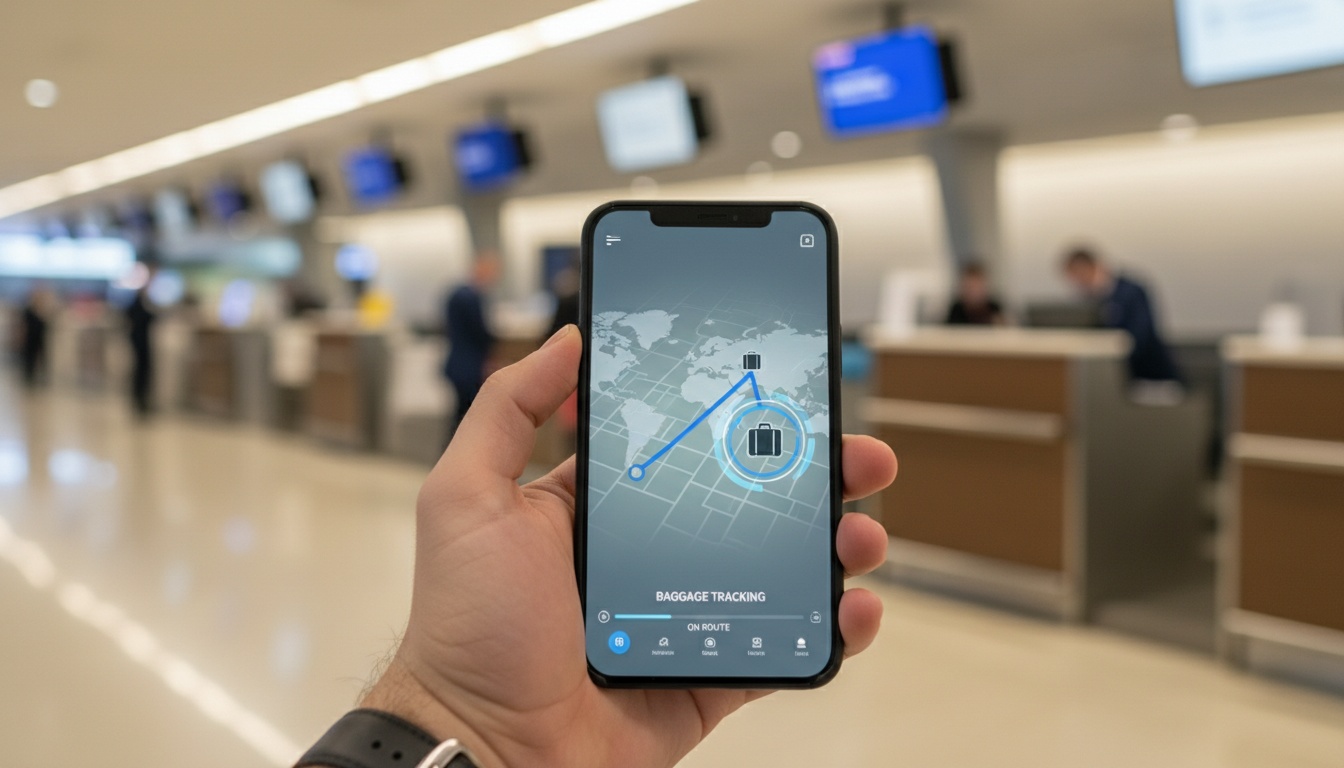
Tracker screenshots serve a powerful secondary purpose: persistent GPS pings in a foreign location can accelerate the claim timeline by demonstrating the bag never re-entered your possession. UAE-based adjusters are increasingly using "Find My" network data to verify whether theft occurred in public versus while the bag was in airline custody — a distinction that affects liability.
If your baggage claim also involves delayed departure costs, see our breakdown on Airport Security Delays 2026: UAE Travel Insurance Guide to understand how interconnected travel disruptions are handled.
2026 Tech Standards: Comparing Tracker Validity for UAE Insurance Claims
Not all tracking technology carries equal weight with UAE underwriters. Here's how the three main categories compare:
| Technology Type | Real-Time Accuracy | Insurers' Acceptance Level | Primary Documentation Needed |
|---|---|---|---|
| Bluetooth Tags (AirTag/Tile/Galaxy Tag) | Low (crowd-dependent) | Supplementary only | PIR + WorldTracer report |
| Airline RFID Tags | High (airport-specific) | Primary (airline-sourced) | Airline baggage report |
| Independent GPS Suitcases | High (cellular network) | Supplementary-to-moderate | PIR + GPS logs + carrier statement |
Bluetooth tags like AirTags are crowd-dependent — if your bag is in a low-traffic area, location updates may be infrequent and imprecise. Independent GPS suitcases with cellular connectivity offer stronger, timestamped location logs that adjusters find more compelling.
One critical caveat for 2026: smart luggage with non-removable lithium-ion batteries continues to be rejected by airlines departing from DXB and AUH per GCAA safety regulations. If your bag is offloaded due to battery non-compliance, any resulting damage claim may be denied entirely. Read our dedicated guide on Smart Luggage Battery Bans 2026 and UAE Travel Insurance before purchasing.
Compare & Choose on eSanad
The Step-by-Step Protocol for Validating Lost Baggage Using Smart Data
Follow this exact sequence to maximize your lost baggage claim outcome as a UAE policyholder in 2026:
- At the airport immediately: File a PIR at the airline's baggage services desk before leaving arrivals. Get a written reference number.
- Capture tracker evidence: Screenshot your app's full location history with visible timestamps. Note the last known location.
- Contact your insurer within 24 hours: Most UAE policies require notification within one to three days of the incident.
- Day 3-7: Follow up with the airline using your WorldTracer number. Share tracker data to support your baggage delay claim and request interim expense coverage.
- Day 21: If the bag remains unrecovered, formally escalate to a total loss claim. Submit all PIR documentation, tracker logs, WorldTracer history, and original receipts for contents.
- Contents valuation: Remember — tracker data proves location, not contents. Submit purchase receipts for every item inside. Without receipts, adjusters apply depreciated values.
For travelers carrying valuable items, our guide on Luxury Watch Theft 2026: Travel Insurance Single Item Limits is essential reading — single-item sub-limits frequently surprise claimants at settlement.
You can compare comprehensive travel insurance plans on eSanad to find policies with the highest baggage limits and shortest delay trigger periods before your next trip.
Get a Free Quote Now
Conclusion
Bottom line: In 2026, smart luggage trackers are powerful tools — but they support your UAE lost baggage claim rather than replace the formal airline documentation that insurers require. File your PIR immediately, preserve timestamped tracker logs, and ensure your policy's baggage limits actually cover what you're carrying. The evidence gap is real, but it's entirely bridgeable with the right preparation and the right policy.
Short Summary: Smart trackers support UAE lost baggage claims in 2026 — but the airline's PIR remains the essential primary document insurers require.
Meta Description: Smart luggage trackers won't replace the PIR for UAE lost baggage claims in 2026. Learn what evidence UAE insurers actually require.
Slug: smart-luggage-tracker-lost-baggage-claim-uae-2026
Explore eSanad →
FAQ
Does seeing my bag on a map count as "Proof of Loss" for my UAE insurance provider?
No. Tracker data is classified as supplementary evidence by UAE insurers. The Property Irregularity Report (PIR) from the airline remains the primary required document. Tracker screenshots can accelerate processing but cannot replace the PIR.
What is a Property Irregularity Report (PIR) and why is it more important than my app data?
A PIR is an official airline-issued document confirming your bag was not delivered. UAE insurers require it as primary proof of loss because it establishes the airline's legal acknowledgment of the incident. App data only shows location — it does not confirm the airline's liability.
Are lithium-ion battery smart suitcases banned on flights departing from DXB or AUH?
Smart luggage with non-removable lithium batteries is prohibited on most airlines operating from Dubai and Abu Dhabi airports under GCAA and Dubai Airports baggage rules. If your bag is rejected at check-in for this reason, related damage claims may be denied by your insurer.
How long must a bag be undelivered before it is considered legally lost under UAE travel insurance?
Most UAE travel policies classify baggage as "delayed" for the first 21 days. Only after this period without recovery is it reclassified as a total loss, triggering full replacement value benefits.
Can a UAE insurance company deny a claim if I didn't use a smart tracker?
No. Travel insurance baggage claims are not contingent on using a tracker. However, tracker data can significantly strengthen and expedite a claim. The absence of tracker data is not grounds for denial.
Editorial note: This article is for general information and does not constitute insurance advice. Always confirm terms with your insurer.