

Travel Insurance
Cyber Kidnapping 2026: UAE Travel Insurance Risks

Imagine receiving a frantic call from your child studying abroad — their voice trembling, begging you to wire money immediately. Except they are perfectly safe, completely unaware the call is happening. This is cyber kidnapping in 2026, and UAE travelers are prime targets. Explore how AI voice cloning and digital tracking work — and how your travel insurance policy may offer critical protection.
Understanding Cyber Kidnapping: The 2026 Evolution of Virtual Extortion
Cyber kidnapping is no longer a fringe threat — it has become one of the fastest-growing financial crimes targeting international travelers in 2026. Unlike traditional abductions, the victim is never physically harmed or even aware a crime is occurring. Instead, scammers use AI-generated deepfake voice cloning to replicate a loved one's voice with chilling accuracy, then demand cryptocurrency or instant wire transfers while the "victim" is conveniently unreachable — typically mid-flight.
What makes the 2026 variant particularly dangerous is the sophistication of the targeting. Criminals monitor public social media profiles of UAE residents to identify when a family member boards a long-haul flight. During those offline hours, they strike. A parent in Dubai receives a call that sounds exactly like their university-aged child in London or Toronto, complete with recognizable speech patterns and emotional cues.
| Feature | Traditional Kidnapping | Cyber / Virtual Kidnapping |
|---|---|---|
| Physical Interaction | Victim is physically held | Victim is safe but unreachable/unaware |
| Ransom Method | Cash or physical drop-off | Cryptocurrency or instant wire transfer |
| Insurance Trigger | K&R (Kidnap and Ransom) Policy | Crisis Management / Cyber Extensions |
| Verification Challenge | Visual confirmation possible | AI voice makes verification nearly impossible |
Understanding this threat is step one. For frequent travelers, pairing awareness with the right coverage — including reviewing business travel accident insurance options — is equally essential.
How Scammers Target UAE Travelers: Phishing, Public Wi-Fi, and Social Engineering
UAE residents — especially expatriate families and high-net-worth individuals — are disproportionately targeted due to their high travel frequency and visible social media presence. Scammers employ three primary attack vectors in 2026.
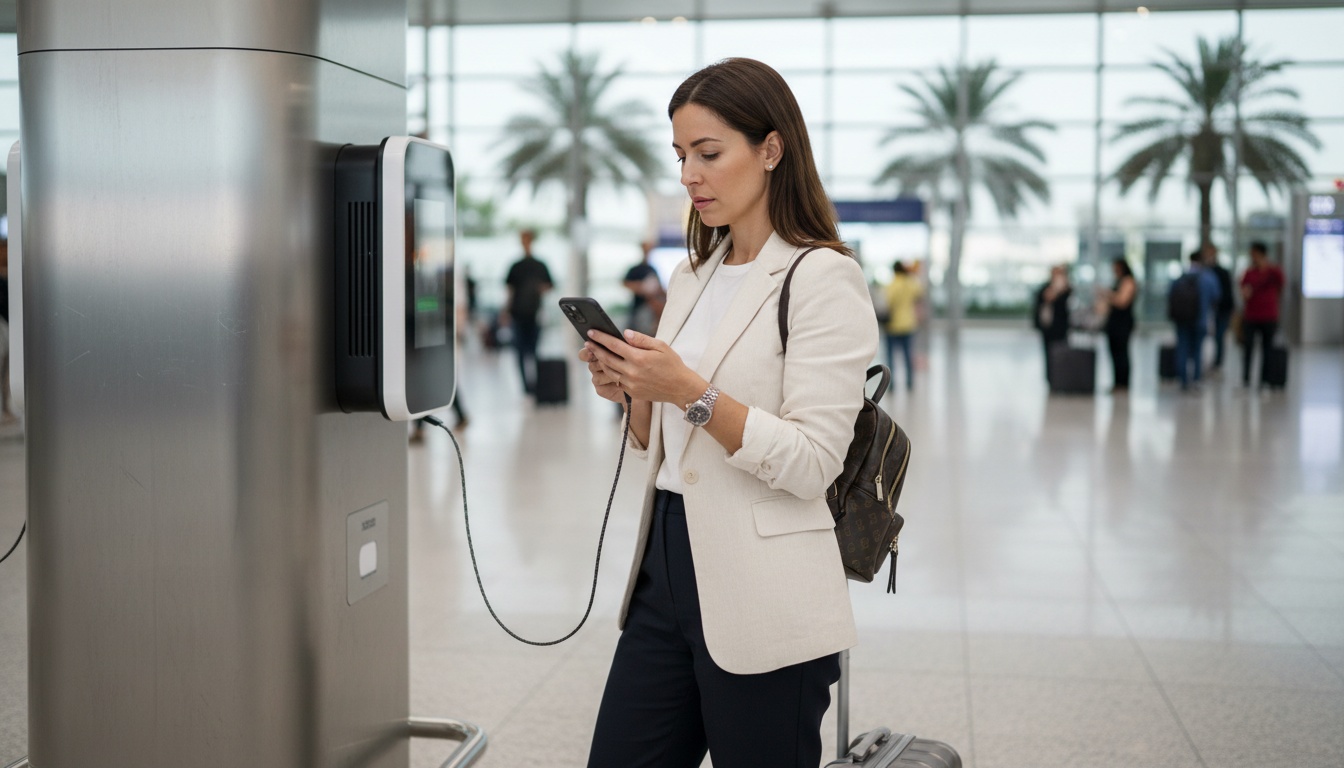
1. Public Wi-Fi Exploitation ("Juice Jacking") Charging your phone at a public USB port in airports like DXB, LHR, or JFK is a known risk. "Juice jacking" allows criminals to extract device data, including contact lists, family photos, and even voice samples from videos — all fuel for a deepfake attack.
2. Social Media Footprint Mapping Scammers scrape Instagram, LinkedIn, and TikTok to build detailed profiles of UAE families. They identify travel dates, family relationships, and emotional dynamics. A departure post tagging your flight is all they need to time the ransom call perfectly.
3. Phishing for Voice Samples Fraudulent "prize calls" or fake customer service interactions are used to record your family member's voice. Even a 30-second clip is sufficient for modern AI cloning tools to generate convincing audio.
If you are traveling this summer with family, also consider checking whether your trip to the USA includes adequate medical coverage — comprehensive plans often include emergency assistance lines that can help verify a scam in real time.
Travel Insurance vs. Cyber Risks: What Is Actually Covered?
This is where many UAE travelers are surprised. Standard travel insurance does not cover ransom payments — cyber or otherwise. However, premium and business-grade travel policies are evolving rapidly in 2026.
What standard UAE travel insurance typically covers:
- Emergency medical evacuation and hospitalization abroad
- Trip cancellation and interruption
- Lost or stolen documents and baggage
What premium and corporate travel policies may include:
- Crisis Response Add-ons: 24/7 access to security consultants who can immediately verify whether a kidnapping call is genuine
- Legal Shield Components: Coverage for legal costs if you need to file a report with foreign law enforcement
- Emergency Assistance Hotlines: Coordinating with UAE embassies and the Ministry of Interior (moi.gov.ae) on your behalf
Business travelers should note that corporate travel policies are significantly more likely to include cyber-extortion protection than individual leisure plans. If you travel frequently for work, reviewing investor and business travel accident insurance is strongly recommended.
For broader trip security planning, also explore the difference between single-trip and multi-trip worldwide coverage to ensure you are not underinsured across multiple destinations.
You can compare premium travel insurance plans on eSanad to identify policies that include crisis response and emergency assistance components suited to today's threat landscape.
Compare & Choose on eSanad
Step-by-Step Protocol: What to Do If You Receive a Virtual Ransom Demand Abroad
Receiving a ransom call is designed to trigger panic. Follow this protocol to stay rational and protect yourself.
- Do not transfer any money. No legitimate emergency requires an instant cryptocurrency payment.
- Use your family secret code word. Call the alleged victim on their known number immediately — in most cases, they will answer normally.
- Hang up and call back. Scammers rely on keeping you on the line. Ending the call breaks their script.
- Contact UAE Embassy or Consulate. They can coordinate verification through official channels in the destination country.
- Report to Dubai Police e-Crime Portal (ecrime.ae) — even if the incident occurred abroad, UAE authorities can assist and track cross-border fraud patterns under Article 52 of the UAE Cyber Law.
- Notify your travel insurer's emergency assistance line immediately. Premium policies include security consultants available 24/7.
Get a Free Quote Now
Conclusion
Bottom line: Cyber kidnapping in 2026 is a sophisticated, AI-powered crime that specifically targets UAE travelers and their families. Establishing a family code word, locking down your social media privacy, and avoiding public charging ports are your first line of defense. Your second line is choosing the right travel insurance policy — one that includes crisis response, emergency assistance, and legal support components.
Short Summary: Learn how AI-powered cyber kidnapping targets UAE travelers in 2026 and what travel insurance coverage can protect your family.
Meta Description: Cyber kidnapping in 2026 uses AI voice cloning to scam UAE families. Learn the warning signs and how travel insurance can protect you abroad.
Slug: cyber-kidnapping-2026-virtual-ransom-risk-uae-travelers
Explore eSanad →
FAQ
Does standard UAE travel insurance cover ransom payments for cyber kidnapping?
Standard travel insurance policies do not cover ransom payments of any kind. However, premium and business travel policies increasingly include Crisis Response add-ons that provide 24/7 security consultants and legal assistance. Review your policy's emergency assistance section carefully before traveling.
How do I verify if a kidnapping call is a deepfake or real while traveling?
Immediately hang up and call your family member directly on their known number. If they answer normally, the call was a scam. A pre-agreed family secret code word is the most reliable real-time authentication tool against AI voice cloning.
Can the UAE Cybersecurity Council help if I am targeted while in a foreign country?
The UAE Cybersecurity Council (csc.gov.ae) provides guidance and resources on cyber threats. For active incidents abroad, contact the nearest UAE Embassy and file a report with the Dubai Police e-Crime Portal at ecrime.ae — UAE authorities cooperate with international agencies on cross-border cybercrime.
Are business travel policies more likely to include cyber-extortion protection than individual ones?
Yes. Corporate and business travel policies are significantly more likely to include cyber-extortion clauses, crisis management support, and legal coverage. Individual leisure policies rarely include these features without a specific add-on rider.
What role does juice jacking play in setting up a virtual kidnapping scam?
Juice jacking — using compromised public USB charging ports at airports — allows criminals to extract voice samples, contact lists, and travel data from your device. This information is then used to build targeted deepfake calls. Always use a personal power bank when traveling internationally.
Editorial note: This article is for general information and does not constitute insurance advice. Always confirm terms with your insurer.